







What's Happening?
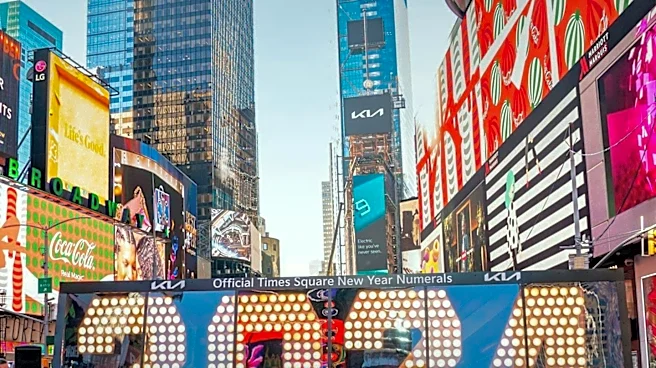
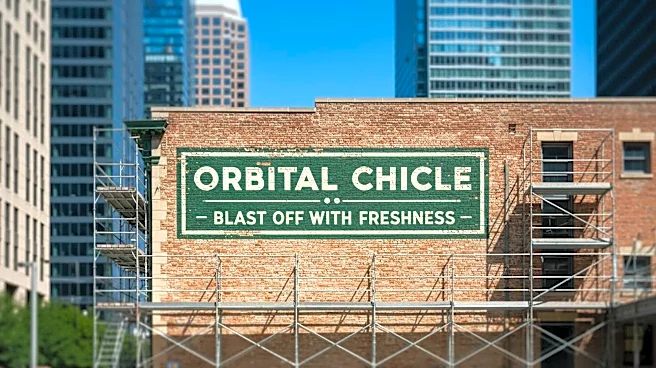
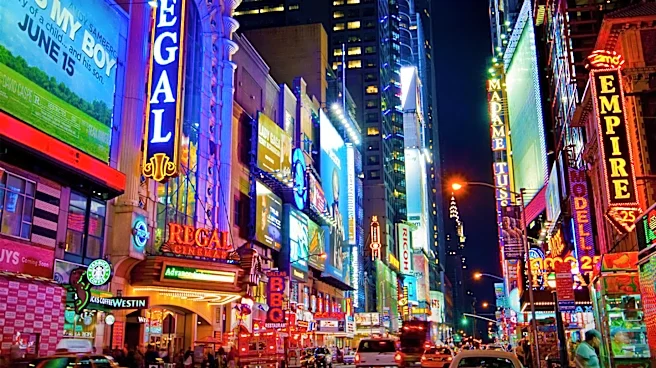
A Wrigley's Spearmint billboard, hidden since 2001, has been uncovered in Times Square due to ongoing construction. The sign, located at 1500 Broadway, was revealed as part of a building facade was exposed. This discovery offers a glimpse into Times Square's
advertising history at the turn of the 21st century, a period marked by the transition to digital displays. The billboard is linked to Wrigley's significant advertising campaign in 2001, a time when LED technology began to dominate the advertising landscape. Historians and enthusiasts of 'ghost signs'—old advertisements uncovered during renovations—find such discoveries fascinating as they serve as time capsules of past commercial and cultural trends.
Why It's Important?
The resurfacing of the Wrigley's billboard highlights the evolution of advertising in Times Square, a globally recognized hub for commercial displays. This discovery underscores the shift from traditional to digital advertising, reflecting broader technological advancements over the past two decades. For historians and cultural enthusiasts, such finds are invaluable, offering insights into past marketing strategies and consumer culture. The billboard's reappearance also raises questions about other potential hidden advertisements in Times Square, suggesting that more relics of advertising history might be concealed behind modern digital displays.
What's Next?
The exposure of the Wrigley's billboard may prompt further exploration of Times Square's architectural layers, potentially leading to more discoveries of historical advertisements. As construction continues, there is speculation about what other hidden signs might be revealed. This could inspire preservation efforts or historical studies focused on the evolution of advertising in urban spaces. Additionally, the building's owner, Tamares Group, may consider leveraging this historical find in future marketing or redevelopment plans for the property.
Beyond the Headlines
The discovery of the Wrigley's billboard not only serves as a historical artifact but also highlights the ongoing dialogue between preservation and modernization in urban environments. As cities evolve, balancing the retention of historical elements with the demands of contemporary development becomes increasingly complex. This find may influence future urban planning and conservation strategies, encouraging a more nuanced approach to integrating historical preservation with modern infrastructure.