



What's Happening?
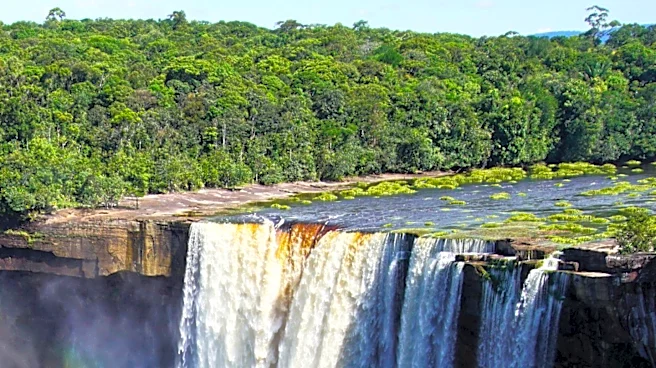
Hess Corporation has entered into a contract worth $750 million in Guyana, with 15% of the proceeds directly allocated to indigenous villages. This funding is intended to support sustainability initiatives and ecotourism ventures operated by these communities.
The initiative is part of Guyana's broader strategy to channel revenues from petroleum production, which began in 2019, into infrastructure, healthcare, education, and air links, with tourism identified as a strategic priority. Susan Rodrigues, Guyana's Minister of Tourism, Industry and Commerce, highlighted that the country welcomed 453,000 visitors in 2025, marking a 22% increase from the previous year. The government aims for growth to extend beyond the capital, ensuring that the country's transformation does not compromise its environment or identity, a position reiterated by President Irfaan Ali.
Why It's Important?
This contract signifies a significant commitment from a major U.S. oil and gas company, Hess Corporation, towards sustainable development and community empowerment in an emerging market. The direct allocation of a substantial portion of the contract proceeds to indigenous communities for ecotourism and sustainability initiatives sets a precedent for corporate social responsibility in resource-rich nations. It demonstrates a model where economic development from natural resources can be linked with environmental protection and local community benefit. For U.S. businesses operating internationally, this could influence future investment strategies, emphasizing the importance of social and environmental governance. The success of this model in Guyana could encourage similar approaches in other developing countries, potentially fostering more equitable and sustainable resource extraction practices globally. It also highlights the growing trend of integrating environmental and social considerations into large-scale industrial projects.
What's Next?
The ongoing implementation of the $750 million contract with Hess Corporation will likely see continued investment in Guyana's indigenous communities and their sustainability projects. The focus will be on how effectively these funds translate into tangible improvements in ecotourism infrastructure, environmental conservation, and the overall well-being of the local populations. The Guyanese government, led by President Irfaan Ali, is expected to continue monitoring the balance between rapid economic growth from oil revenues and the preservation of its environmental and cultural assets. Future reports from the Ministry of Tourism, Industry and Commerce may detail the progress and impact of these initiatives on the tourism sector and local communities. The success of this model could also attract further foreign investment into Guyana, particularly from companies looking to align with sustainable development goals.
Beyond the Headlines
The Hess Corporation contract in Guyana touches upon several deeper implications beyond immediate economic benefits. Ethically, it raises questions about the responsibility of multinational corporations in resource-rich developing nations, particularly concerning indigenous rights and environmental stewardship. The direct funding mechanism to local communities could be seen as a progressive step towards ensuring that the benefits of resource extraction are shared more equitably, potentially mitigating conflicts often associated with such projects. Culturally, supporting indigenous ecotourism ventures helps preserve traditional knowledge and practices, integrating them into modern economic frameworks. This approach could foster a more sustainable form of tourism that respects local cultures and environments, contrasting with models that often lead to displacement or cultural erosion. The long-term success of this initiative could serve as a blueprint for other nations grappling with balancing economic development, environmental protection, and social equity.