




What's Happening?
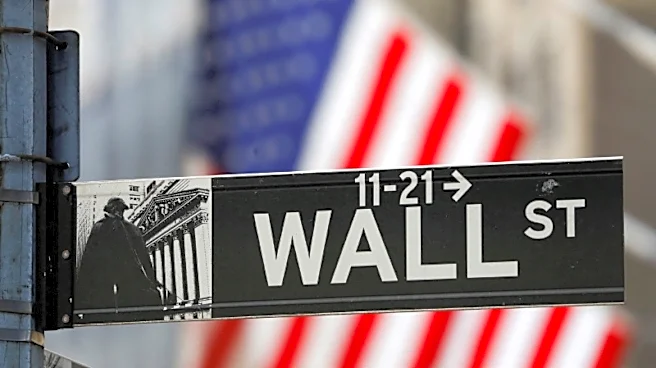
Several prominent Wall Street banks, including JPMorgan, Goldman Sachs, Citigroup, and Bank of America, have collectively lowered their third-quarter trading revenue expectations. This comes after an exceptionally strong second quarter where combined
equities trading revenue for these four banks surged 72% year-over-year to $19.3 billion. The second-quarter bonanza was fueled by investor enthusiasm for AI-related stocks, speculative trading in Asian semiconductor shares, and SpaceX's mega-IPO. However, senior executives are now signaling a deceleration. Bank of America CEO Brian Moynihan projected flat year-over-year sales and trading revenue for the third quarter, leading to a 5% stock drop for the bank. JPMorgan co-President Doug Petno anticipates a seasonal sequential decline but still projects 'teens' percentage growth year-over-year, while Citigroup forecasts mid-single-digit percentage growth. Goldman Sachs CEO David Solomon noted that while the firm's equities business remains strong, fixed income, currencies, and commodities (FICC) revenue will be 'slightly softer.'
Why It's Important?
This shift in outlook from major U.S. financial institutions indicates a potential cooling in the high-growth cycle that characterized the markets business in the second quarter. The significant year-over-year surge in equities trading revenue during Q2 was largely driven by specific, high-momentum events like the AI stock frenzy and a major IPO. The revised forecasts suggest that these extraordinary conditions are not sustainable, leading to more conservative projections for the third quarter. This could impact investor confidence in the banking sector, as evidenced by Bank of America's stock decline following its CEO's remarks. The divergence in performance across different trading segments, such as strong equities versus softer FICC, highlights the evolving dynamics within financial markets. For the broader U.S. economy, a slowdown in trading revenue for these large banks could reflect a more cautious investment environment or a normalization of market activity after a period of heightened speculation.
What's Next?
The major Wall Street banks are scheduled to report their third-quarter earnings next month, which will provide concrete data on the actual performance of their trading desks. Investors will be closely watching these reports to assess the extent of the slowdown and whether the revised forecasts were accurate. The comments from bank executives at recent industry conferences suggest a consensus around a near-term deceleration, but the full impact will only be clear with the official earnings releases. Further, the performance of specific segments, such as prime brokerage in Asia, will be scrutinized for signs of structural shifts rather than just seasonal fluctuations. The market's reaction to these earnings reports will likely influence the stock performance of these banks and potentially the broader financial sector, as investors adjust their expectations for future growth and profitability in a post-bonanza environment.
Beyond the Headlines
The exceptional second-quarter performance, driven by phenomena like the AI stock frenzy and a major IPO, underscores the increasing influence of specific technological trends and large-scale market events on the financial sector's profitability. The subsequent lowering of expectations highlights the inherent volatility and cyclical nature of trading revenues, which can be heavily influenced by transient market conditions rather than sustained underlying economic growth. This situation also brings into focus the challenge for banks to maintain consistent high-level performance in an environment where market drivers can shift rapidly. The emphasis on 'structural demand' in areas like prime brokerage, despite the near-term deceleration, suggests that banks are looking for more stable, long-term growth drivers beyond speculative trading. This could lead to a strategic re-evaluation of risk exposure and investment in more resilient business lines, potentially influencing future capital allocation and operational strategies within the U.S. banking industry.