
What's Happening?
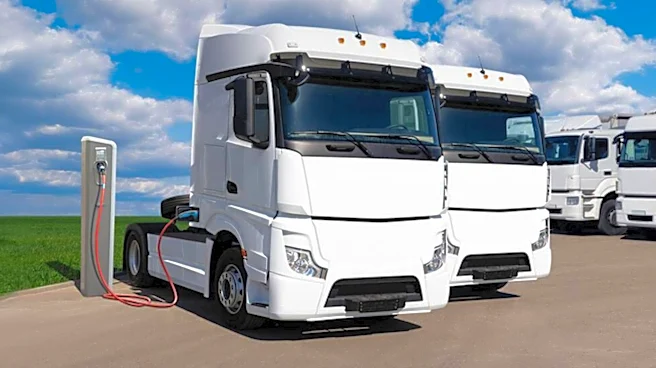
A recent survey conducted by the Öko-Institut has revealed that early adopters of electric trucks in Europe are largely satisfied with their performance. The survey, which included 57 German companies
using heavy electric trucks for over a year, found that 93% of respondents were satisfied or very satisfied with their vehicles. These companies, customers of Daimler Truck’s European commercial vehicle brands, reported that their electric trucks, ranging from 3.5-metric-ton vans to 18-ton long-haul rigs, were reliable and offered lower fuel costs. However, charging infrastructure remains a significant challenge, with depots having an average grid connection of 1,115 kW and installed charging capacity at 629 kW. Public charging stations, which account for about 8% of energy consumption, are not designed for large commercial vehicles, leading to high prices and unclear cost structures. Despite these issues, over 90% of respondents expect electric trucks to dominate their fleets by 2030.
Why It's Important?
The shift towards electric trucks in Europe highlights a growing trend in the transportation industry towards sustainability and reduced emissions. This transition is significant for the U.S. as it indicates a potential shift in global logistics practices that could influence American companies. The challenges faced by European companies, particularly regarding charging infrastructure, provide valuable insights for U.S. policymakers and businesses as they consider similar transitions. The satisfaction reported by European companies suggests that electric trucks can be a viable alternative to traditional vehicles, potentially leading to reduced operational costs and environmental impact. However, the infrastructure challenges underscore the need for investment in charging networks to support widespread adoption.
What's Next?
As electric trucks become more prevalent, there will likely be increased pressure on governments and private sectors to improve charging infrastructure. This could lead to policy changes and investments aimed at expanding and upgrading charging networks to accommodate larger commercial vehicles. Additionally, the U.S. Supreme Court's decision in Montgomery v. Caribe Transport II, LLC, which holds freight brokers liable for state-law negligence claims, may influence how companies approach safety and compliance in the logistics sector. This ruling could lead to stricter safety practices and increased scrutiny of carriers' operations.
Beyond the Headlines
The adoption of electric trucks and the challenges associated with charging infrastructure highlight broader issues related to the transition to sustainable energy. The reliance on lithium-ion batteries and the exploration of alternatives like sodium-ion batteries reflect ongoing efforts to find more sustainable and cost-effective energy solutions. Sodium-ion batteries, with their greater availability of raw materials and better environmental footprint, could play a crucial role in the future of electric vehicles. This shift could also impact global supply chains, as the demand for different raw materials changes.