

What's Happening?
Renaissance Technologies, a quantitative investment firm, substantially increased its stake in SanDisk (SNDK) by more than 55-fold, reaching a value of $481 million as of September 30, 2026. This information comes from the firm's 13F filing on November
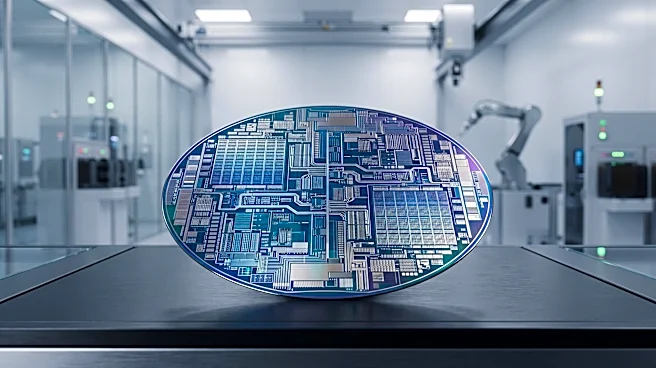
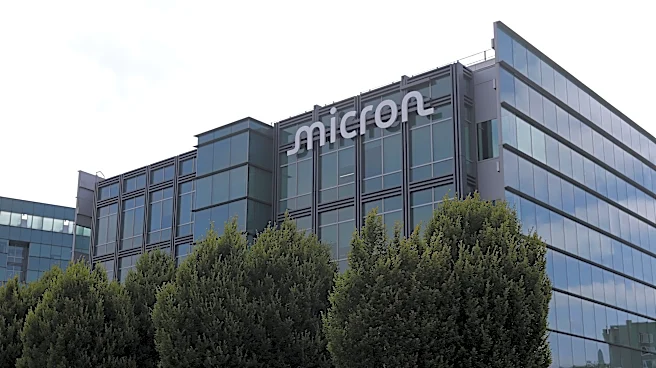
12, 2026. The firm's position in SanDisk grew from 4,980 shares at the end of June to 276,460 shares. This move is part of a broader rotation into memory and storage companies, including new or increased positions in Micron Technology (MU), Western Digital (WDC), and Seagate Technology (STX). Concurrently, Renaissance Technologies significantly reduced its holdings in large-cap technology leaders such as NVIDIA (NVDA) and other major platform companies. Micron Technology became its largest disclosed holding at $1.62 billion. The firm's investment decisions are driven by complex computer models, indicating a model-driven shift towards companies involved in providing memory and storage solutions for the expanding artificial intelligence sector.
Why It's Important?
This strategic shift by Renaissance Technologies signals a significant trend in the investment landscape, particularly concerning the technology sector. The substantial increase in SanDisk and other memory/storage companies, coupled with a reduction in large-cap tech leaders like NVIDIA, suggests a re-evaluation of growth drivers within the market. This move indicates that quantitative models are identifying strong potential in the memory and storage segments, likely driven by the increasing demands of artificial intelligence and data processing. For U.S. industries, this could mean increased investment and focus on semiconductor and data storage manufacturers, potentially leading to innovation and expansion in these areas. Investors may interpret this as a signal to reallocate portfolios towards components essential for AI infrastructure rather than solely focusing on the broader AI platform companies. The shift could also impact the valuations of these companies, potentially boosting those in the memory sector while putting pressure on some of the previously high-flying large-cap tech stocks.
What's Next?
The disclosed holdings reflect Renaissance Technologies' portfolio as of September 30, 2026, and do not necessarily represent its current positions. However, the reported rotation suggests a potential ongoing trend in quantitative investment strategies. Other investment firms and institutional investors may observe this shift and re-evaluate their own portfolios, potentially leading to further capital flows into the memory and storage sectors. The performance of these newly favored companies, such as SanDisk, Micron, Western Digital, and Seagate, will be closely watched to validate the models' predictions. Conversely, the companies from which Renaissance divested, like NVIDIA, may face increased scrutiny, although their long-term prospects remain tied to broader market dynamics and their own innovation. Future 13F filings from Renaissance Technologies and other major funds will provide further insights into whether this rotation is a sustained trend or a short-term tactical adjustment.
Beyond the Headlines
The investment decisions of a highly influential quantitative firm like Renaissance Technologies often reflect deeper underlying economic and technological shifts. This particular rotation highlights the growing importance of foundational hardware components, specifically memory and storage, in the era of artificial intelligence. While much attention has been given to AI software and platforms, the ability to process and store vast amounts of data efficiently is critical for AI's continued development and deployment. This move underscores the idea that the 'picks and shovels' of the AI gold rush – the hardware infrastructure – are becoming increasingly valuable. It also raises questions about the sustainability of valuations for some large-cap tech companies if investment capital begins to flow more heavily into their component suppliers. The ethical and legal implications of such model-driven trading are also noteworthy, as these algorithms can exert significant influence on market movements, potentially creating self-fulfilling prophecies or exacerbating market volatility.