



What's Happening?
Morgan Stanley analysts, including Adam Jonas, have published research projecting substantial revenue for Starlink from autonomous driving and robotics. The report estimates that robotics customers could account for 11% of Starlink's revenue by 2030,
growing to 29% by 2035, and reaching 36% by 2040. Specifically for autonomous vehicles, the research forecasts Starlink-related revenue of $6.4 billion in 2035 and $31.2 billion in 2040. This projection suggests a 4.9x increase in autonomous vehicle revenue over five years, translating to approximately 37% compound annual growth. The report also introduces the concept of a 'robot-to-robot mesh hybrid computing architecture,' where machines communicate directly and share computing tasks between onboard processors and remote resources, with Starlink serving as a key link. While the report outlines these potential synergies, no official confirmation from SpaceX, Tesla, or Elon Musk regarding a finished integration or specific deployment details has been made.
Why It's Important?
This analysis from Morgan Stanley highlights a potentially transformative revenue stream for Starlink and underscores the growing convergence of satellite connectivity with advanced robotics and autonomous systems. For the U.S. technology and automotive sectors, these projections suggest a future where robust, ubiquitous connectivity is critical for the widespread adoption and functionality of autonomous vehicles and various robotic applications. If these forecasts materialize, it would significantly impact hardware manufacturers, software developers, and service providers in these fields. Companies involved in antenna technology, power electronics, and edge computing stand to benefit from increased demand. The report also provides a framework for investors to evaluate the long-term growth potential of companies like SpaceX and Tesla, particularly as they explore new markets beyond their current core offerings. The integration of Starlink into autonomous systems could enhance operational efficiency, safety, and the overall capabilities of robotic fleets, potentially accelerating their deployment across various industries.
What's Next?
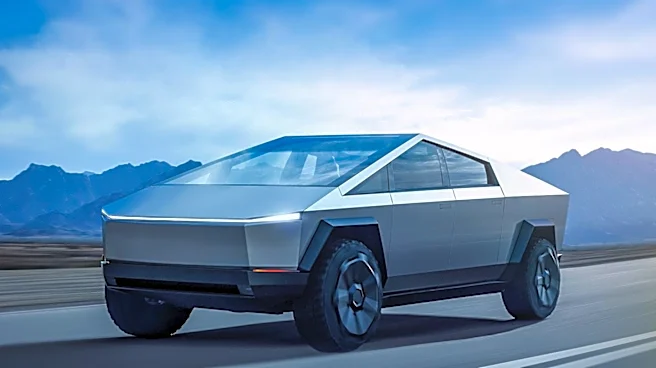
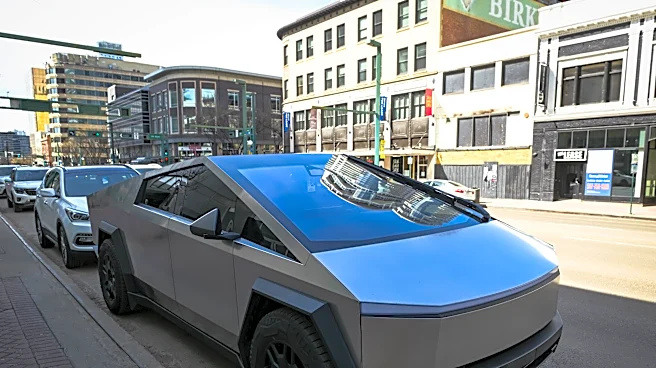
The projections from Morgan Stanley are analyst estimates and not confirmed plans by SpaceX or Tesla. Future developments will likely involve more concrete announcements regarding the integration of Starlink technology into autonomous vehicles, such as Tesla's Cybercab. Investors and industry observers will be looking for official statements, product demonstrations, or regulatory filings that confirm the deployment of Starlink terminals in these systems, including specific hardware models, installation dates, and production quantities. The evolution of regulatory frameworks for autonomous driving will also play a crucial role, as widespread adoption depends on approvals for driverless operations. Additionally, the competitive landscape for satellite connectivity in robotics is expected to intensify, with other satellite providers potentially offering similar fleet-focused plans. The financial implications for SpaceX, particularly concerning its capital needs and debt, could also be influenced by the realization of these projected revenue streams.
Beyond the Headlines
The Morgan Stanley report delves into the deeper implications of a 'robot-to-robot mesh hybrid computing architecture,' suggesting a fundamental shift in how autonomous systems will operate. This architecture implies a future where machines are not just connected but are actively collaborating and sharing computational loads, blurring the lines between local and cloud-based processing. This could lead to more resilient, efficient, and intelligent autonomous networks. However, it also raises complex questions regarding data security, privacy, and the ethical implications of highly interconnected robotic systems. The reliance on satellite links for critical functions in autonomous vehicles introduces new considerations for system reliability and potential vulnerabilities to signal interference or cyberattacks. Furthermore, the report's long-term projections, extending to 2040, highlight the inherent uncertainties in forecasting technological adoption and market growth over such extended periods, especially in rapidly evolving fields like AI and robotics. The success of such integrations will depend not only on technological feasibility but also on overcoming regulatory hurdles and gaining public trust.