
What's Happening?
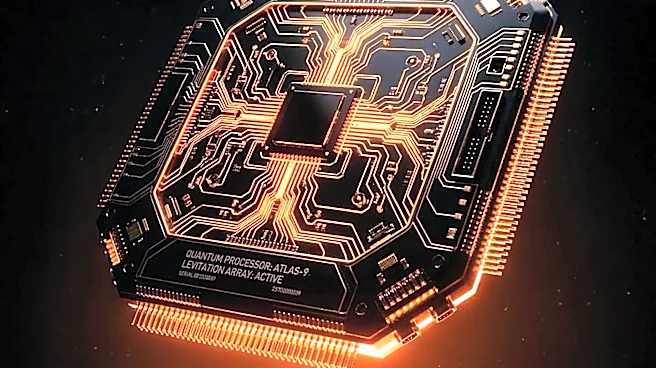
Rigetti Computing, Inc. (RGTI) is making significant strides in quantum computing, particularly with its superconducting, chiplet-based architecture. The company's 108-qubit Cepheus-1 system has achieved
a 99.5% median two-qubit gate fidelity, validating its design approach. Rigetti is now setting ambitious targets, aiming for a 300-plus-qubit system by mid-2028 and a 1,000-qubit system with 99.9% fidelity within approximately three years. Commercial opportunities are also emerging, including a collaboration with Hewlett Packard Enterprise and Pittsburgh Supercomputing Center to integrate a 9-qubit Novera system into the TangleLab testbed in 2027. Financially, Rigetti maintains flexibility with $497.1 million in cash, cash equivalents, and available-for-sale investments, and no debt. The company also secured a definitive agreement for up to $100 million in U.S. Department of Commerce funding. Despite these advancements, third-quarter 2026 revenues saw a 26% year-over-year decline to approximately $1.4 million, attributed to the timing of system deliveries and customer acceptance milestones.
Why It's Important?
Rigetti Computing's progress in quantum processor development is crucial for the advancement of the U.S. quantum computing industry. The achievement of high gate fidelity with its 108-qubit system demonstrates the viability of its chiplet-based architecture, which could be a key to scaling quantum computers. The company's ambitious roadmap to 1,000 qubits signifies a potential leap forward in quantum computational power, which could have profound implications for various sectors, including national security, scientific research, and complex data analysis. The U.S. Department of Commerce funding underscores the strategic importance of quantum technology to the nation, aiming to bolster domestic capabilities and competitiveness in this emerging field. However, the decline in third-quarter revenues highlights the challenge of translating technological breakthroughs into consistent commercial growth, a common hurdle for companies in nascent, high-tech industries. The ability of Rigetti to convert its technical progress into commercial wins will be critical for its long-term sustainability and for the broader U.S. quantum ecosystem.
What's Next?
Rigetti Computing is focused on several key initiatives in the near future. The company plans to integrate a 9-qubit Novera system into the TangleLab testbed in 2027 through its collaboration with Hewlett Packard Enterprise and Pittsburgh Supercomputing Center. Technologically, Rigetti is targeting the development of a 300-plus-qubit system by mid-2028 and a 1,000-qubit system with 99.9% fidelity within approximately three years. The company's financial outlook for full-year 2026 projects approximately $20 million in revenues, contingent on the customer acceptance of its C-DAC system in the fourth quarter. Scaling towards larger systems will necessitate substantial investments in research and development, fabrication, and infrastructure. While the Department of Commerce funding provides financial resources, it also involved issuing approximately 7.7 million common shares, leading to some shareholder dilution. Rigetti's ability to meet its technology milestones and expand customer adoption will be crucial for its future growth and market position.
Beyond the Headlines
The trajectory of Rigetti Computing reflects broader trends and challenges within the U.S. quantum computing landscape. The emphasis on increasing qubit count and gate fidelity highlights the ongoing race to achieve 'quantum advantage,' where quantum computers can perform tasks intractable for classical supercomputers. This pursuit carries significant ethical and national security implications, as quantum computing could revolutionize cryptography, materials science, and drug discovery. The U.S. government's investment through the CHIPS Act signifies a strategic commitment to fostering domestic quantum capabilities, aiming to prevent reliance on foreign technology and maintain a competitive edge. However, the financial performance of companies like Rigetti underscores the long-term investment horizon and inherent risks associated with developing such foundational technologies. The balance between rapid technological advancement and sustainable commercialization will be a defining characteristic of the quantum computing sector for years to come, shaping its impact on U.S. industries and global technological leadership.