





What's Happening?
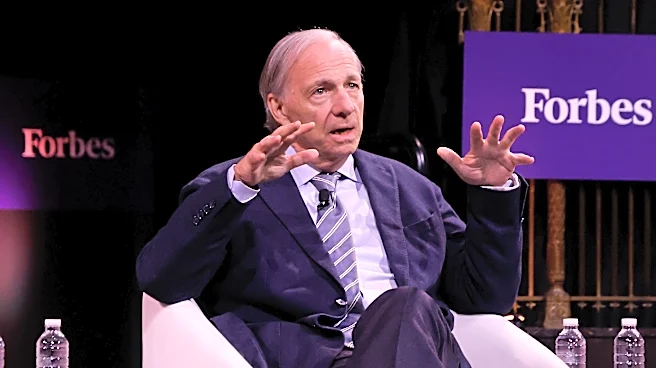
Ray Dalio, the founder of Bridgewater Associates, has reiterated his recommendation for investors to maintain a 10% to 15% allocation of their portfolios in gold. These comments, made on Nicole Lapin's Money Rehab podcast around November 9, have recently
gained renewed attention as gold prices attempt to recover from a 14-month low. Dalio views gold as a permanent diversifier, advocating for its inclusion in portfolios regardless of market conditions. His rationale is deeply rooted in concerns over the escalating U.S. government debt, which has surpassed $40 trillion. He likens this debt accumulation to 'plaque building up in arteries,' warning of potential financial instability and a 'heart attack' for the economy as interest costs increasingly strain government spending. In such an environment, Dalio argues that the printing of money erodes its value, making gold a crucial asset for preserving wealth. This long-standing advice from Dalio resurfaces as gold experienced a dip to approximately $3,425 an ounce before rebounding to around $3,590, still significantly below its January record.
Why It's Important?
Dalio's endorsement of gold carries significant weight within the financial community, potentially influencing retail and wealth-management investor demand, especially during periods of price volatility. His argument for gold as a permanent diversifier, rather than a speculative trade, provides a framework for long-term portfolio construction. The emphasis on rising U.S. government debt highlights a critical macroeconomic concern that could impact the stability of the dollar and the broader financial system. If Dalio's warnings about debt-induced financial strain materialize, the value of traditional currencies could diminish, making gold a more attractive store of value. His preference for gold over cryptocurrencies, citing central banks' ability to hold gold and the potential for monitoring and seizure of crypto assets, also shapes the ongoing debate about alternative reserve assets. This perspective could reinforce gold's traditional role as a safe-haven asset among institutional investors and central banks, potentially diverting some capital away from digital alternatives.
What's Next?
The renewed discussion around Dalio's gold allocation advice is likely to fuel further debate among investors and financial analysts regarding portfolio diversification strategies. While high-profile endorsements typically do not cause immediate market shifts, they can influence long-term investment trends and investor sentiment, particularly among those reassessing their asset allocations after recent price fluctuations. The short-term trajectory of gold prices will continue to be influenced by factors such as real yields, the strength of the U.S. dollar, and expectations regarding Federal Reserve interest rate policies. However, Dalio's long-term framework, which focuses on the structural risks posed by sovereign debt, suggests that the fundamental case for gold as a hedge against systemic financial risks will persist. Investors may increasingly consider gold as a foundational component of their portfolios, aligning with Dalio's view of it as a permanent diversifier against potential economic instability.
Beyond the Headlines
Dalio's persistent advocacy for gold extends beyond mere investment advice; it reflects a deeper concern about the structural integrity of the global financial system, particularly in the context of unprecedented levels of government debt. His analogy of U.S. debt to 'plaque in arteries' underscores a systemic risk that could lead to a significant re-evaluation of traditional economic models and monetary policies. This perspective challenges the conventional wisdom that government debt can be perpetually managed without severe consequences. The debate between gold and cryptocurrencies as alternative reserve assets also highlights evolving perceptions of trust and control in the digital age. Dalio's argument that central banks can hold gold, while crypto can be monitored and seized, touches upon fundamental questions of sovereignty, privacy, and the nature of money itself. This ongoing discussion could influence future regulatory frameworks for digital assets and the long-term role of physical commodities in a rapidly changing financial landscape.