





What's Happening?
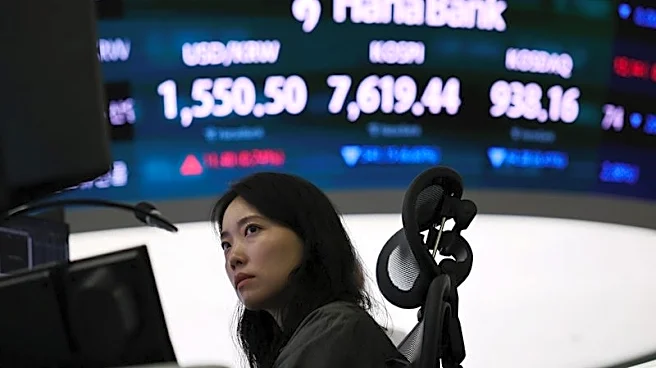
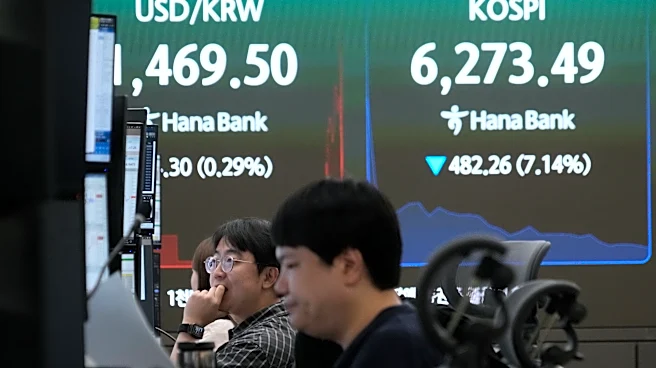
South Korea's top financial regulator, the Financial Services Commission, is contemplating imposing a cap on single-stock leveraged exchange-traded funds (ETFs) investments for retail investors. This consideration comes amid significant market volatility,
particularly affecting major semiconductor stocks like Samsung Electronics and SK Hynix. The regulator, led by Chairman Lee Eog-weon, is reviewing measures to curb the demand for these ETF products, which are primarily tied to the country's leading semiconductor companies. Recently, the cash deposit requirement for retail investors in these ETFs was increased. The move aims to mitigate risks associated with high leverage in volatile markets, as evidenced by the recent sharp declines in Samsung and SK Hynix shares due to concerns over competition from Chinese firms and AI infrastructure financing risks.
Why It's Important?
The potential cap on leveraged ETF investments is significant as it reflects the South Korean government's proactive approach to managing financial market risks. Leveraged ETFs can amplify gains but also losses, posing substantial risks to retail investors, especially in volatile sectors like semiconductors. By considering such a cap, the regulator aims to protect retail investors from excessive risk exposure and maintain market stability. This move could influence investor behavior, potentially reducing speculative trading and promoting more stable investment strategies. The decision also highlights the broader challenges faced by South Korea's semiconductor industry, which is crucial to the national economy, amid increasing global competition and technological shifts.
What's Next?
If implemented, the cap on leveraged ETF investments could lead to a shift in retail investment strategies, with investors possibly seeking alternative investment vehicles. The financial regulator may continue to monitor market conditions and adjust policies to ensure investor protection and market stability. Additionally, the semiconductor industry in South Korea may need to address competitive pressures and financing challenges to maintain its global position. The regulator's actions could also prompt discussions on broader financial market reforms to enhance investor education and risk management practices.