
What's Happening?
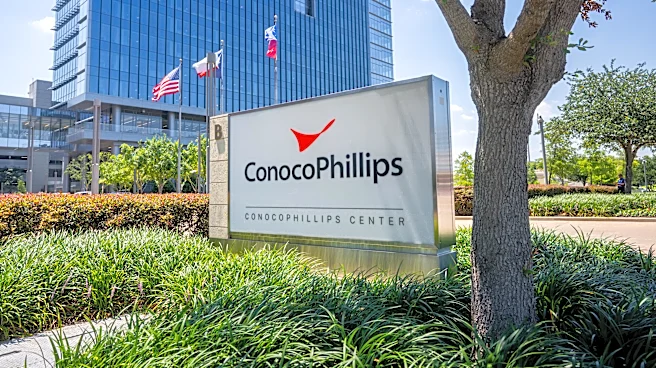
ConocoPhillips, a U.S.-based oil and gas producer with a market value of approximately $160.9 billion, has agreed to sell its entire Norwegian upstream business. This move marks the company's exit from
the Norwegian continental shelf after more than 50 years of operation in the region. The transaction involves transferring ConocoPhillips' Norwegian upstream assets to Vår Energi. Management has indicated that the proceeds from this sale will be utilized for general corporate purposes and share repurchases. ConocoPhillips' core activities include exploring for, producing, transporting, and marketing crude oil, natural gas, LNG, and related liquids across various global regions. This divestment is part of a broader strategy to reshape its portfolio.
Why It's Important?
This strategic divestment by ConocoPhillips is significant as it reflects a broader industry trend among major energy companies to optimize their portfolios by divesting mature, capital-intensive assets in favor of projects that offer higher free cash flow and lower breakeven costs. By selling its Norwegian upstream unit, ConocoPhillips aims to generate cash that can support larger, more profitable projects and enhance shareholder returns through buybacks. This move is aligned with the company's stated goal of increasing free cash flow from long-life oil and LNG projects while maintaining tight reinvestment. The shift could impact the company's operational footprint and financial structure, potentially freeing up capital for investments in other key regions like Alaska and the Lower 48, or international fields that align with its long-life, low-unit-cost strategy.
What's Next?
Following the sale of its Norwegian upstream business, ConocoPhillips is expected to reallocate the proceeds towards its stated corporate objectives, including share repurchases and investment in other strategic projects. The company's narrative is focused on achieving a $7 billion free cash flow uplift by 2029, partly by lowering free cash flow breakevens. This divestment supports the 'portfolio high grading' catalyst within this narrative, allowing ConocoPhillips to recycle capital from mature assets into opportunities with lower supply costs, such as the Willow project, Port Arthur LNG, and other international fields. However, this move also places increased pressure on the execution of large, capital-intensive projects in other regions, as the company will have less contribution from its long-held North Sea base.
Beyond the Headlines
The decision by ConocoPhillips to exit Norway after five decades highlights the evolving landscape of the global energy sector, where companies are increasingly prioritizing capital efficiency and strategic focus over long-standing regional presence. This move could signal a broader trend among U.S. energy majors to shed mature assets in established basins to fund new ventures in areas with higher growth potential or lower operational costs. Such portfolio adjustments can have long-term implications for energy security, regional economic development in divested areas, and the competitive dynamics within the global oil and gas industry. It also underscores the continuous evaluation of asset portfolios in response to market conditions, technological advancements, and shareholder expectations for returns.