




What's Happening?
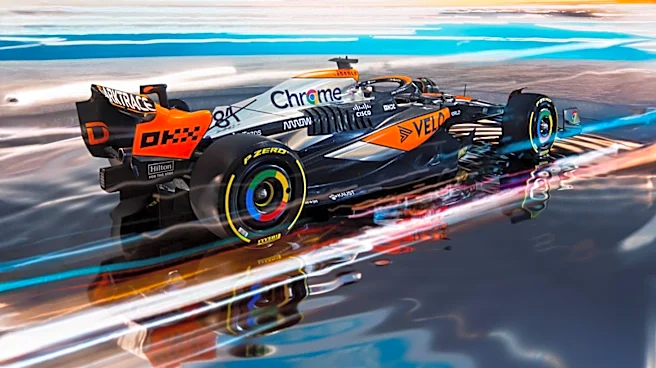
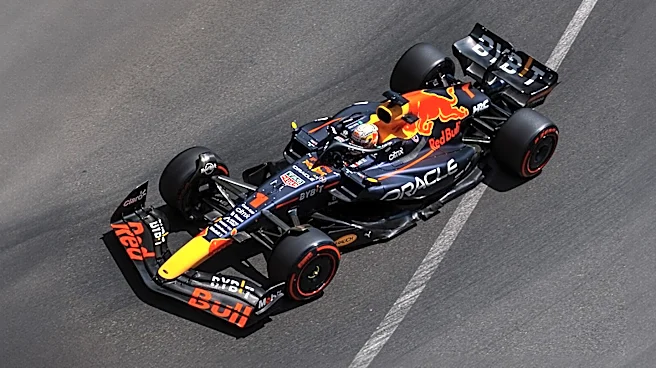
McLaren and Red Bull have unveiled significant upgrade packages for their cars ahead of the Azerbaijan Grand Prix. McLaren has introduced eight updates, focusing on its sidepod, engine cover, floor, diffuser, rear suspension, and rear wing. These changes
aim to improve flow conditioning towards the rear of the car and maximize aerodynamic benefits. Red Bull has brought five updates, primarily centered on its floor and sidepod, with the goal of achieving additional local load while maintaining flow stability. Both teams have made specific modifications to their car components to enhance performance on the Baku City Circuit. In contrast, Mercedes and Ferrari have opted not to introduce any new parts for this event.
Why It's Important?
The introduction of these extensive upgrade packages by McLaren and Red Bull highlights the competitive nature of Formula 1 and the continuous pursuit of performance advantages. These developments could significantly impact the teams' standings and the overall dynamics of the Azerbaijan Grand Prix. For McLaren, the focus on aerodynamic improvements suggests an effort to gain an edge in downforce and efficiency, which are crucial on a street circuit like Baku. Red Bull's emphasis on floor and sidepod modifications indicates a strategy to optimize airflow and stability, potentially leading to better cornering speeds and overall lap times. The decision by Mercedes and Ferrari to forgo upgrades could be a strategic choice to focus on other races or a sign of confidence in their current car setup, but it also carries the risk of falling behind their rivals in this particular event. The performance of these upgrades will be closely watched as they could influence the championship battle.
What's Next?
The immediate next step will be the practice sessions and qualifying rounds for the Azerbaijan Grand Prix, where the effectiveness of these new upgrade packages will be tested on the track. Teams will analyze data from these sessions to fine-tune their car setups and assess the real-world impact of their modifications. The performance during the race will provide crucial insights into whether these upgrades deliver the anticipated advantages. Depending on the results, other teams might accelerate their own development programs or re-evaluate their strategies for upcoming races. The outcome of this Grand Prix could also influence the championship standings, potentially shifting momentum between the leading contenders. Further developments and counter-upgrades from rival teams are likely in subsequent races as the season progresses.
Beyond the Headlines
The continuous cycle of upgrades in Formula 1 reflects a deeper technological arms race within the sport, where innovation and engineering prowess are as critical as driver skill. This constant evolution pushes the boundaries of automotive technology, with advancements in aerodynamics, materials science, and engine efficiency often finding their way into broader automotive applications. The strategic decisions made by teams regarding when and where to introduce upgrades also highlight the complex interplay of resource allocation, risk assessment, and competitive intelligence. The absence of upgrades from some teams, while others introduce many, can reveal differing philosophies on car development and championship strategy, impacting team morale and investor confidence. This dynamic environment underscores the blend of sport, science, and business that defines modern Formula 1.