








What's Happening?
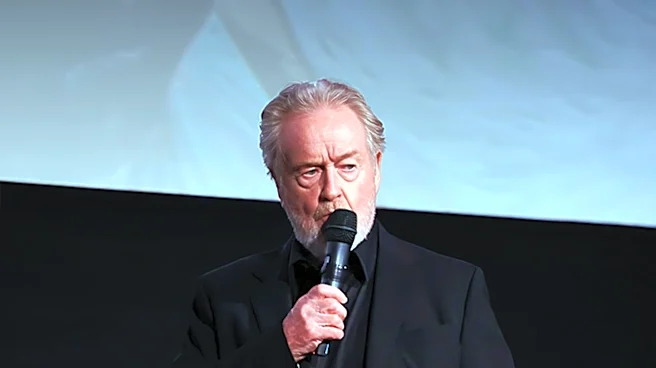
Filmmaker Ridley Scott recently discussed the iconic 'Tears in Rain' monologue from his 1982 film 'Blade Runner.' Scott recounted the emotional experience of hearing actor Rutger Hauer recite the monologue for the first time during filming. Hauer, who
played the replicant Roy Batty, had largely improvised and refined the speech, which was originally longer. Scott described being moved to tears by Hauer's delivery, emphasizing the profound impact of the lines. This monologue, delivered by Batty in his final moments, has since become one of the most celebrated and analyzed scenes in cinematic history, solidifying 'Blade Runner's' status as a seminal work in the science fiction genre. The film, released just three years after Scott's 'Alien,' further established his reputation for groundbreaking science fiction cinema.
Why It's Important?
The enduring legacy of 'Blade Runner' and its 'Tears in Rain' monologue highlights the significant cultural and artistic impact of science fiction cinema. This particular scene is often cited for its philosophical depth, exploring themes of humanity, mortality, and artificial intelligence. Its influence extends beyond film, inspiring countless artists, writers, and game developers in the cyberpunk genre. The story behind its creation, with Hauer's creative input, underscores the collaborative nature of filmmaking and how an actor's contribution can elevate a script to legendary status. For film enthusiasts and scholars, this anecdote provides valuable insight into the creative process behind a cinematic masterpiece and reinforces the film's position as a benchmark for storytelling in the genre.
What's Next?
While 'Blade Runner' continues to be a subject of discussion and analysis, Ridley Scott remains an active filmmaker. His reflections on past works like 'Blade Runner' contribute to the ongoing discourse surrounding classic cinema and its influence on contemporary filmmaking. The film's availability on streaming platforms like Prime Video ensures its continued accessibility to new generations of viewers, allowing its themes and artistic merits to be re-evaluated and appreciated. The enduring popularity of 'Blade Runner' also suggests a continued interest in its universe, as evidenced by sequels and related media, indicating that its impact on popular culture is far from over.
Beyond the Headlines
The 'Tears in Rain' monologue transcends its narrative function within 'Blade Runner' to become a profound meditation on the human condition, even when delivered by a non-human character. It challenges viewers to consider what defines life, consciousness, and empathy. The scene's power lies in its ability to evoke a sense of tragic beauty and existential reflection, making a replicant's final words resonate deeply with human audiences. This ethical and philosophical dimension is a hallmark of great science fiction, pushing boundaries and prompting introspection about our own existence and the future of technology. The monologue's impact underscores the capacity of art to explore complex ideas and leave a lasting impression on collective consciousness.