

What's Happening?
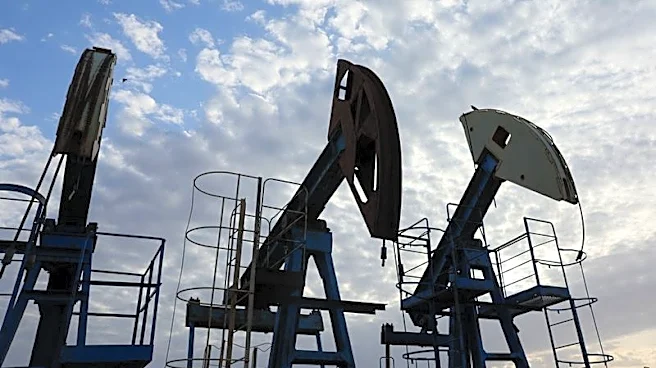
US investment firm Carlyle Group has officially withdrawn from the bidding process to acquire Russian oil giant Lukoil’s international assets, a deal estimated to be worth approximately $22 billion. This portfolio includes the refinery in Burgas. Carlyle Group confirmed
its cessation of active pursuit for the acquisition but did not provide further details for its decision. According to Lukoil's annual report, the US Treasury Department’s Office of Foreign Assets Control (OFAC) did not authorize the proposed deal, which was initially submitted in January, leading to its expiration at the end of July. Lukoil had put these assets up for sale following the imposition of US sanctions on Russia due to the conflict in Ukraine. Previously, Carlyle Group had reached a preliminary agreement for the acquisition and was engaged in discussions with potential investors from Abu Dhabi and the US International Development Finance Corporation. Despite Carlyle's withdrawal, other investors globally have shown interest in Lukoil’s international assets, with US billionaire Todd Boehly reportedly still among the potential buyers, having secured support from Washington and Persian Gulf states.
Why It's Important?
Carlyle Group's withdrawal from the Lukoil asset sale underscores the significant impact of US sanctions on international business transactions involving Russian entities. The non-authorization by OFAC highlights the stringent enforcement of these sanctions, effectively blocking major US investment firms from engaging in deals that could indirectly benefit sanctioned Russian companies. This event signals to other global investors the complexities and risks associated with acquiring assets from sanctioned nations, potentially deterring future investments in similar contexts. For Lukoil, the inability to finalize a sale with a prominent firm like Carlyle Group could complicate its efforts to divest international assets and mitigate the financial pressures stemming from sanctions. The continued interest from other investors, such as Todd Boehly, suggests a divided approach in the global investment community, where some are willing to navigate the geopolitical landscape with backing from certain political circles, while others, like Carlyle, opt for caution in the face of regulatory hurdles.
What's Next?
The withdrawal of Carlyle Group leaves the future of Lukoil's $22 billion international assets uncertain, particularly regarding the Burgas refinery. Lukoil will likely continue to seek buyers for these assets, potentially focusing on investors who can secure the necessary regulatory approvals or who are less exposed to US sanctions. The reported continued interest from US billionaire Todd Boehly, with backing from Washington and Persian Gulf states, suggests that alternative pathways for acquisition might be explored, possibly involving different ownership structures or financing arrangements to circumvent sanction-related obstacles. The US Treasury Department's stance on such transactions will remain a critical factor, as any future deal would likely require careful navigation of OFAC regulations. This situation could also prompt other US investment firms to re-evaluate their engagement with assets linked to sanctioned countries, leading to a more cautious approach in similar cross-border deals.
Beyond the Headlines
This development extends beyond a mere business transaction, reflecting the broader geopolitical strategy of the United States to exert economic pressure on Russia through sanctions. The explicit non-authorization by OFAC sends a clear message about the US government's commitment to enforcing these measures, even when it impacts significant financial deals for American firms. It highlights the intricate balance between economic interests and foreign policy objectives. The situation also brings to light the challenges faced by multinational corporations operating in an increasingly fragmented global economy, where political considerations can override commercial logic. Furthermore, the pursuit of these assets by other investors, despite the regulatory complexities, indicates a potential for geopolitical maneuvering and the formation of new alliances in the energy sector, particularly with involvement from Persian Gulf states. This could lead to a re-shaping of global energy asset ownership and influence, with non-Western entities potentially gaining a larger foothold in strategic energy infrastructure.