


What's Happening?
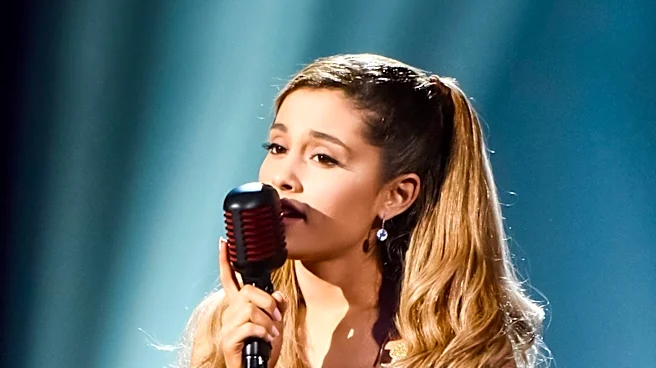
Ariana Grande has received judicial authorization from a Los Angeles court to expedite the collection of information in her lawsuit against unidentified individuals. The lawsuit alleges that these individuals were involved in the theft and distribution
of unreleased music, photographs, and other personal files. The court's decision, issued on a Wednesday, allows Grande's legal team to request information from internet platforms and other entities sooner than the usual waiting period for such procedures. Grande filed the lawsuit in July against several 'John Does,' a term used in U.S. legal proceedings when defendants have not yet been identified. The complaint states that individuals within Grande's close circle were targeted with attacks on their devices to obtain unpublished material. According to legal documents, the stolen material was subsequently commercialized online, including on the 'dark web,' for significant sums. The lawsuit aims to identify those responsible for the intrusions and the subsequent distribution of the files. The judge approved the accelerated procedure, noting that the standard 20-day waiting period would not be effective in this case, as the defendants' identities could not be discovered without first accessing information held by third parties.
Why It's Important?
This legal development is significant for the entertainment industry and intellectual property rights, particularly in the digital age. The expedited discovery process could set a precedent for how celebrities and content creators combat digital piracy and hacking. By allowing Grande's team to quickly subpoena internet platforms and other companies, the court acknowledges the urgency of identifying perpetrators who operate anonymously online. This case highlights the ongoing challenges artists face in protecting their unreleased work and personal data from sophisticated cyberattacks and illicit online marketplaces. The commercialization of stolen content, especially on the dark web, underscores a growing black market for intellectual property. A successful outcome for Grande could deter future hacking attempts and strengthen legal frameworks for digital content protection, potentially influencing how tech companies handle user data and respond to requests for identifying malicious actors. It also brings attention to the vulnerability of even high-profile individuals to such digital crimes.
What's Next?
Following the court's authorization, Ariana Grande's legal team will proceed with issuing subpoenas to internet platforms and other relevant entities. The primary goal is to obtain data that can lead to the identification of the 'John Doe' defendants. Once these individuals are identified, the formal notification of the lawsuit can proceed, moving the case into its next phase. The legal team has indicated that they have already identified specific internet platforms and external entities that may possess records crucial for establishing the identities of the unknown defendants. This accelerated process is expected to provide the necessary information to link the hackers to the court proceedings. The case is not an isolated incident, with Grande's team noting previous leaks of unreleased music, including up to 45 songs in 2023. The outcome of this case could influence future legal strategies for artists dealing with similar issues of digital theft and unauthorized distribution.
Beyond the Headlines
This case delves into the complex ethical and legal dimensions of digital privacy and intellectual property in an increasingly interconnected world. The unauthorized access and commercialization of an artist's unreleased work not only represent a financial loss but also a violation of creative control and personal privacy. The use of the 'dark web' for selling stolen content highlights the persistent challenge of regulating illicit online activities and the need for enhanced cybersecurity measures. Furthermore, the case underscores the broader societal implications of digital theft, where personal and professional boundaries can be easily breached. The legal battle could prompt a re-evaluation of data security protocols within the music industry and among individuals associated with high-profile artists. It also raises questions about the responsibility of internet platforms in preventing and responding to the distribution of stolen content, potentially leading to new industry standards or legislative actions to better protect digital assets and personal information.