

What's Happening?
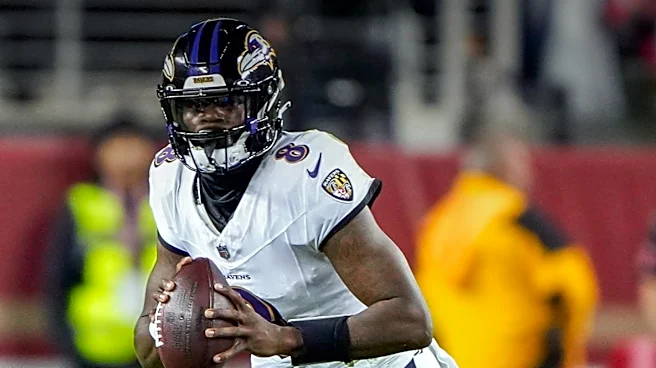
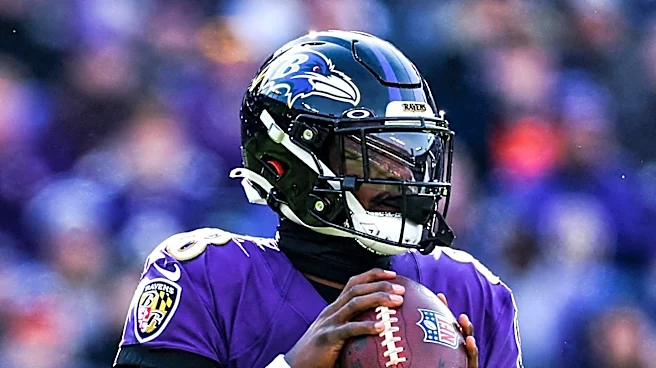
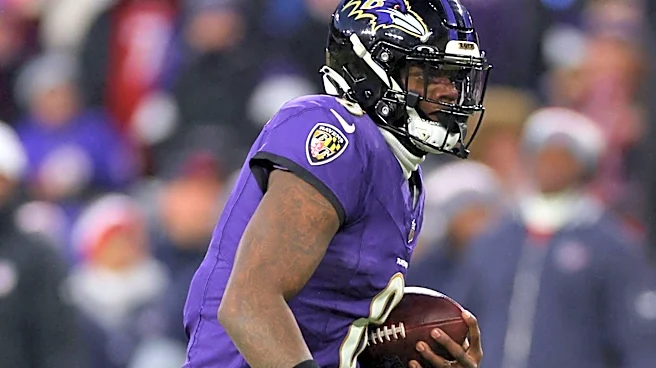
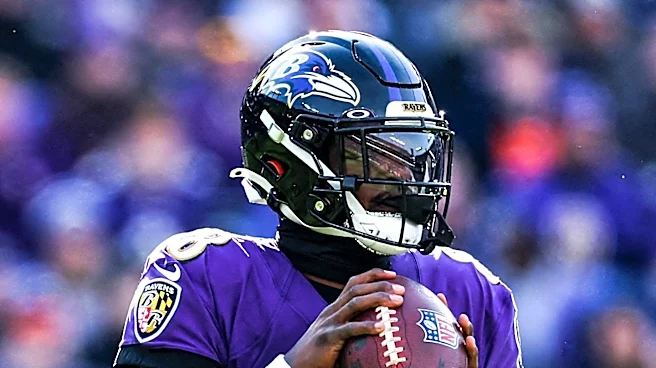
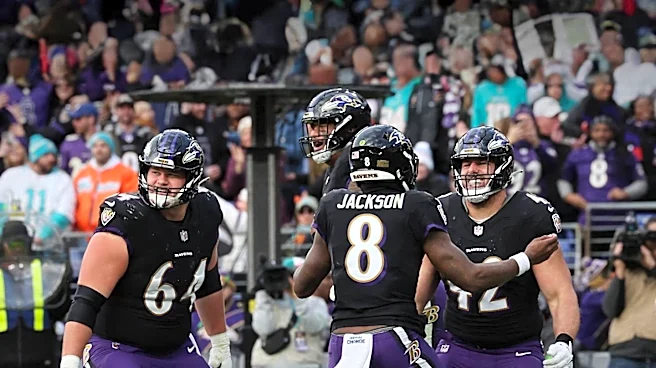
Lamar Jackson, the quarterback for the Baltimore Ravens, continues to face media narratives that question his character and professionalism, despite his achievements on the field. A series by Femi Ayanbadejo highlights how unsupported commentary about
Jackson has become accepted as fact over time. This includes claims about his maturity and work habits, which have been repeated without evidence. Jackson's decision to represent himself in contract negotiations has also been scrutinized, though he secured a significant contract extension in 2023. The media's portrayal of Jackson often blurs the line between opinion and fact, affecting public perception.
Why It's Important?
The media narratives surrounding Lamar Jackson highlight the broader issue of how athletes, particularly those who deviate from traditional expectations, are portrayed. This can impact their public image and career opportunities. Jackson's case underscores the importance of distinguishing between fact and speculation in media reporting. The persistence of these narratives, despite Jackson's on-field success and lucrative contract, suggests a systemic issue in sports journalism. This could influence how other athletes are perceived and treated, potentially affecting their marketability and contract negotiations.
What's Next?
As Jackson continues his career, the focus may shift back to his performance, especially with the Ravens' new coaching staff. However, the media's portrayal of him could still influence public and professional perceptions. Jackson's next contract negotiation will be a critical moment to assess whether the narratives have a lasting impact. The sports media industry may also face increased scrutiny regarding its role in shaping athlete narratives, potentially leading to calls for more responsible reporting practices.
Beyond the Headlines
The situation with Lamar Jackson reflects broader cultural and ethical questions about media responsibility and the treatment of athletes. It raises concerns about how narratives can perpetuate stereotypes and affect individuals' reputations. This case may prompt discussions about the need for more rigorous standards in sports journalism and the potential consequences of narrative-driven reporting. It also highlights the challenges athletes face in managing their public image in an era of rapid information dissemination.