
What's Happening?
Nominations for the 69th Grammy Awards have been announced, showcasing a strong presence of female musicians leading the honorees. British singer-songwriter Raye received the most nominations with 11 nods,
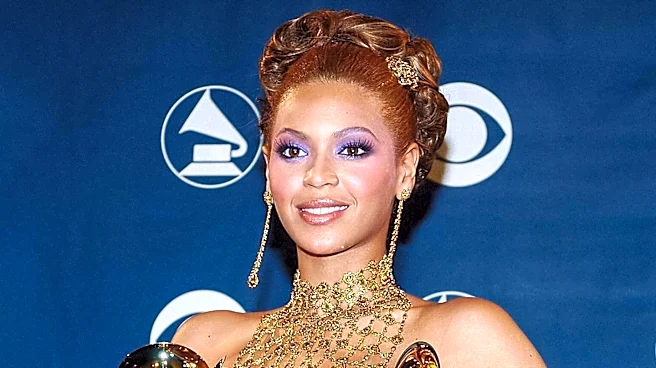
followed by Spanish artist Rosalía and country star Ella Langley with nine and seven nominations, respectively. Other artists with multiple nominations include Miranda Lambert, Olivia Rodrigo, Phoebe Bridgers (seven each), and Bruno Mars, Leon Thomas, and Olivia Dean (six each). Beyoncé made history by securing her 100th Grammy nomination for the song "Morning Dew (Donk)" in the Best R&B Solo Performance category, further solidifying her status as the most-nominated artist in Grammy history. The ceremony is scheduled to be broadcast live on ABC and streamed on Hulu and Disney+ from the Crypto.com Arena in Los Angeles on February 7.
Why It's Important?
The Grammy Awards remain a significant event in the music industry, influencing artist careers, album sales, and public perception. The strong showing of female artists in this year's nominations reflects a continuing shift in the industry towards greater recognition and representation of women in music. Raye's leading 11 nominations signal a potential breakthrough year for the artist, while Beyoncé's 100th nomination underscores her enduring impact and legendary status in contemporary music. The nominations also highlight the diverse landscape of popular music, spanning genres from pop and country to rap and R&B, indicating the broad appeal and evolving tastes of audiences. For nominated artists, a Grammy win or even a nomination can significantly boost their profile, leading to increased touring opportunities, endorsements, and overall career longevity. The broadcast of the ceremony on major platforms like ABC, Hulu, and Disney+ ensures a wide reach, making it a key cultural event.
What's Next?
The music industry will now focus on the lead-up to the 69th Grammy Awards ceremony on February 7. Artists, their labels, and publicists will engage in campaigns to garner support and attention for their nominated works. Speculation and predictions about potential winners will intensify across media outlets and social platforms. The ceremony itself will be a major event, featuring performances from many of the nominated artists, which often become viral moments and further boost their visibility. Following the awards, winners typically experience a surge in album and song sales, increased streaming numbers, and heightened demand for live performances. The results of the Grammys can also influence future music trends and industry investments, as labels often look to replicate the success of award-winning artists and genres. The event will also be a platform for various social and cultural statements from artists.
Beyond the Headlines
The Grammy nominations often spark broader conversations about representation, diversity, and the evolving criteria for musical excellence within the industry. The significant number of female nominees this year could be seen as a positive indicator of progress in addressing historical gender imbalances in music awards. However, discussions may also arise regarding the representation of various genres, independent artists, and artists from different cultural backgrounds. Beyoncé's continued dominance and record-breaking nominations also prompt reflection on the longevity of superstar careers and the impact of sustained artistic innovation. The Grammys, while celebrating artistic achievement, also serve as a barometer for the commercial and cultural health of the music industry, reflecting shifts in consumer preferences, technological advancements in music distribution, and the ongoing debate about what constitutes 'award-worthy' music in a rapidly changing landscape.