










What's Happening?
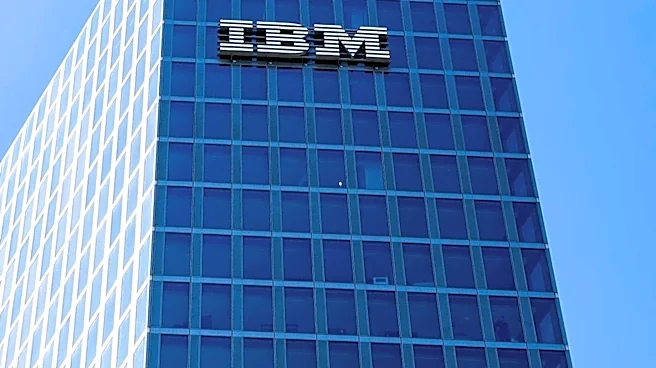
IBM experienced a significant stock decline of 25.2% on July 14, erasing approximately $68 billion in market value. This drop occurred despite a robust AI investment cycle, with global AI spending expected to reach $2.59 trillion in 2026. The decline was
attributed to IBM's preliminary second-quarter results, which showed only a 1% revenue increase to $17.2 billion, falling short of expectations. The company's software growth slowed, and its infrastructure segment declined, leading to missed mainframe targets and unclosed major deals. CEO Arvind Krishna acknowledged the company's challenges, contributing to the stock's sharp decline.
Why It's Important?
IBM's stock performance highlights the challenges faced by established technology companies in adapting to rapidly changing market dynamics. The shift in AI spending towards hardware and infrastructure, coupled with IBM's missed targets, underscores the importance of strategic alignment with market trends. The company's significant investments in acquisitions like Red Hat and its focus on generative AI have not yet translated into expected growth, raising questions about its long-term strategy. Investors and industry analysts will be closely monitoring IBM's ability to realign its portfolio and capitalize on AI-driven opportunities.
What's Next?
IBM's future performance will depend on its ability to address the challenges identified in its recent earnings report. The company may need to reassess its strategic priorities and investment focus to better align with market demands. Additionally, IBM's efforts to close pending deals and improve its infrastructure segment will be critical in restoring investor confidence. The company's response to these challenges will be closely watched by stakeholders, as it seeks to regain its footing in the competitive technology landscape.