






What's Happening?
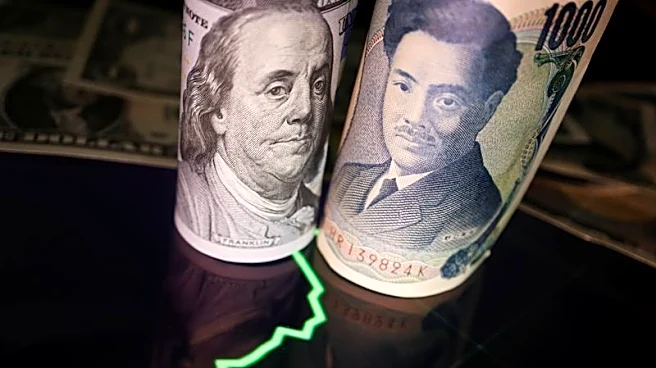
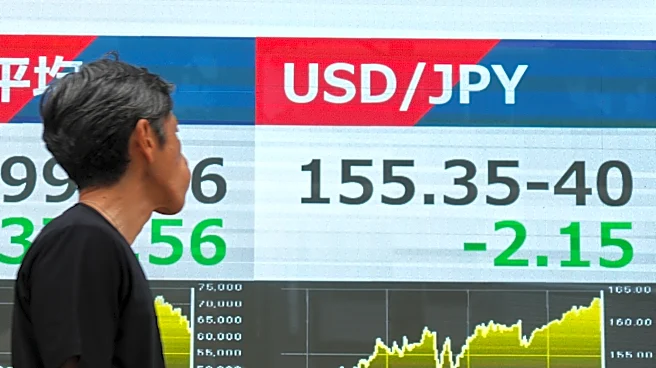
The U.S. dollar experienced a sharp decline against the Japanese yen after market interventions by the U.S. and Japan. The dollar, which had been trading above 163 yen, fell to 156.34 yen following the intervention. This move was confirmed by President
Trump and Japan's Finance Minister, who stated that the intervention was necessary to address the yen's prolonged weakness. The yen's depreciation has been a concern for Japan, as it increases import costs and inflation. The intervention is seen as a strategic move to stabilize the currency and support Japan's economy.
Why It's Important?
The intervention in the currency markets by the U.S. and Japan highlights the complexities of international economic relations and the impact of currency fluctuations on global trade. A weaker dollar can make U.S. goods more competitive abroad, potentially boosting exports. For Japan, stabilizing the yen is crucial to managing inflation and maintaining economic stability. This event underscores the interconnectedness of global economies and the importance of coordinated efforts to address economic challenges. The intervention also reflects the strategic partnership between the U.S. and Japan, emphasizing mutual economic interests.