



What's Happening?
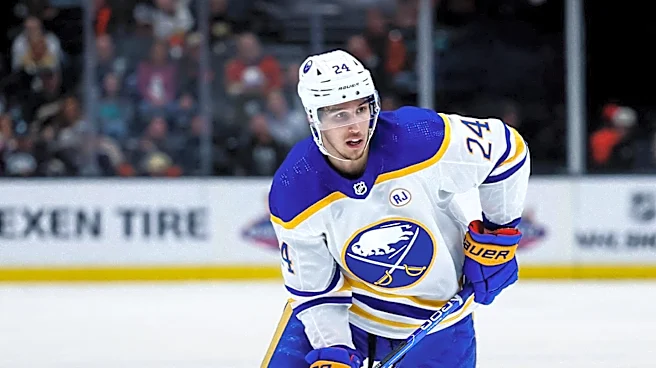
The Buffalo Sabres are experiencing a significant economic resurgence, largely attributed to a substantial increase in season ticket sales. According to Pete Guelli, the Sabres' president of business operations, the team has approximately 10,000 full
42-game season ticket holders, with an additional 4,000 equivalents generated through partial plans like mini-packs and half-seasons. This marks a considerable improvement compared to the last decade, during which the team faced a 'lost generation of hockey fans' due to 14 years of futility. The Sabres' decision to cap season ticket sales, rather than selling to full capacity, is a strategic move to ensure access for individual game and group sales, aiming to build a sustainable fan base for the future. This approach contrasts with past practices where teams would heavily rely on season ticket sales to near capacity.
Why It's Important?
The economic surge of the Buffalo Sabres, driven by increased season ticket sales, is a critical indicator of the team's revitalized market appeal and the broader economic health of the NHL in Buffalo. This growth signifies a successful turnaround strategy, demonstrating that a winning product can re-engage a previously disaffected fan base. For the local economy, increased attendance at games translates to higher revenue for the team, which can be reinvested into the organization, local businesses, and job creation. The strategic decision to maintain access for individual game sales also ensures a broader engagement with the community, fostering new generations of fans and preventing market saturation. This model could serve as a blueprint for other sports franchises facing similar challenges, highlighting the importance of sustained team performance and thoughtful business operations in driving economic success and community connection.
What's Next?
The Buffalo Sabres will likely continue to implement their strategic approach to ticket sales, balancing season ticket holders with individual and group sales to maintain broad market access. The team's sustained on-ice performance will be crucial in retaining and further growing their fan base. Future initiatives may include enhanced fan engagement programs, community outreach, and continued investment in player development to ensure long-term success. The NHL commissioner, Gary Bettman, has consistently expressed confidence in the Pegulas' ownership and the Buffalo market's ability to respond to a winning team, suggesting continued support from the league. The Sabres' economic momentum could also influence their ability to attract and retain top talent, further bolstering their competitive standing and market value. The focus will remain on building a consistent winning culture to solidify their economic gains and fan loyalty.
Beyond the Headlines
The Sabres' economic resurgence extends beyond mere ticket sales, reflecting a deeper psychological and cultural shift within the Buffalo sports community. The 'lost generation of hockey fans' highlights the profound impact of prolonged team underperformance on community morale and identity. The current turnaround signifies a healing process, where renewed hope and excitement are replacing years of disappointment. This phenomenon underscores the intrinsic link between a sports team's success and the collective spirit of its city. Furthermore, the Sabres' strategic business model, prioritizing long-term fan engagement over short-term maximum season ticket sales, represents an evolving understanding of sports marketing. It acknowledges the importance of accessibility and continuous cultivation of new fans, rather than solely relying on a core loyal base. This approach could influence how other professional sports franchises manage their fan relationships and market strategies, emphasizing community integration and sustainable growth over immediate revenue maximization.