






What's Happening?
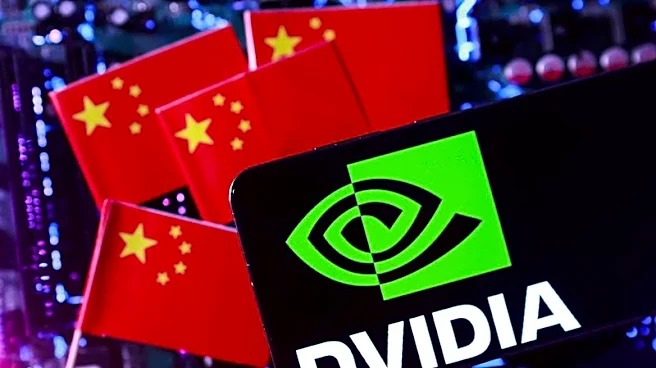
U.S. restrictions on advanced artificial intelligence (AI) chips are significantly impacting data center financing across Asia, leading to delays and withdrawals of billions of dollars in deals. Lenders are re-evaluating their exposure to facilities that
serve Chinese technology companies, including ByteDance, Alibaba, and Tencent. This reassessment stems from new U.S. export controls that impose legal and regulatory risks on data center operators providing computing capacity to Chinese customers. For instance, a $6.6 billion loan for Bain Capital's Bridge Data Centres, which serves ByteDance, has been delayed. Similarly, a $372 million loan for Digital Halo and a $480 million financing arrangement for Aolani, both with ByteDance business, are facing increased scrutiny or withdrawal. The financing concerns follow new U.S. restrictions requiring companies in Singapore, Malaysia, Indonesia, Thailand, and Brazil to obtain government licenses for purchasing advanced AI chips from American manufacturers. Data centers globally leasing significant computing capacity to Chinese companies must also secure separate licenses within 90 days.
Why It's Important?
These U.S. AI chip curbs are creating a substantial setback for the rapidly expanding financing market for AI infrastructure in Asia. Loans to data center companies in the Asia-Pacific region had surged to over $49 billion in 2023, but this growth is now threatened. The increased due diligence and withdrawal of financing by major banks like Citigroup and Standard Chartered, alongside Singaporean lenders, indicate a significant shift in risk assessment within the financial sector. This directly impacts the ability of data center operators to secure funding for expansion and operations, particularly those with Chinese clientele. The uncertainty is also affecting broader investment plans, with DayOne Data Centers, a major ByteDance customer, postponing its U.S. public listing, and a BlackRock-led consortium considering reducing its offer for an Asia-Pacific data center portfolio. This demonstrates the far-reaching economic consequences of U.S. technology export controls, influencing global investment flows and the development of AI infrastructure.
What's Next?
The immediate future will likely see continued re-evaluation of existing and prospective data center financing deals across Asia, especially those with ties to Chinese technology companies. Data center operators will need to navigate the complex landscape of U.S. export controls and potentially seek alternative financing sources or adjust their business models to reduce reliance on Chinese clients. The requirement for data centers to obtain separate licenses within 90 days to continue serving Chinese companies will be a critical deadline, potentially leading to further disruptions if licenses are not secured or if the process proves challenging. The broader impact could include a slowdown in AI infrastructure development in certain Asian markets and a re-alignment of investment strategies by financial institutions and private equity firms in the region.
Beyond the Headlines
The U.S. AI chip restrictions highlight a broader geopolitical strategy aimed at limiting China's technological advancement, particularly in critical areas like artificial intelligence. This move underscores the increasing weaponization of technology in international relations, where access to advanced components becomes a tool of foreign policy. The ripple effects extend beyond direct chip sales, impacting the entire ecosystem of data centers and financial services that support AI development. This could lead to a more fragmented global technology landscape, with different regions developing their own AI infrastructure and supply chains, potentially increasing costs and reducing interoperability. The ethical implications of such controls also arise, as they can influence the pace and direction of AI innovation globally, potentially creating disparities in technological capabilities between nations.