


What's Happening?
An investigation by The Guardian and Food and Water Watch has revealed significant corporate consolidation within the U.S. grocery market, leading to concerns about reduced competition and higher prices for consumers. The report indicates that a few companies
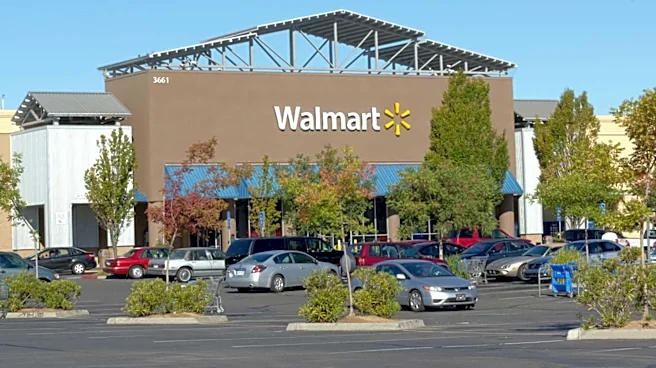
control a substantial majority of regularly purchased grocery items. For example, three companies—Coca-Cola, PepsiCo, and Keurig Dr Pepper—own over 90% of sodas. PepsiCo alone controls nearly 90% of dips, and Barilla holds almost a third of the pasta market. In the cereal sector, General Mills, Kellogg Company, and Post Holdings collectively own approximately 72.8% of brands. The meat industry also shows high concentration, with the four largest companies—Cargill, Tyson Foods, JBS, and National Beef—controlling around 80% of the beef market, and over half of the poultry industry dominated by Tyson Foods, JBS, Sanderson Farms, and Perdue Farms. This trend extends to grocery retailers, with the attempted merger of Kroger and Albertsons potentially leading to nearly half of the U.S. grocery market being controlled by Kroger, Albertsons, and Walmart.
Why It's Important?
This corporate consolidation is important because it challenges the fundamental premise of capitalism, which posits that rigorous competition among companies leads to lower prices, increased innovation, and higher wages. The investigation suggests that the U.S. government's permissive stance on mergers and acquisitions has allowed food corporations to grow to massive sizes, creating an illusion of competition rather than a truly free market. This lack of genuine competition can prevent prices from falling naturally, contributing to the rising costs faced by consumers. When a few dominant players control large segments of the market, they face less pressure to lower prices or innovate, as consumers have fewer alternatives. This dynamic can disproportionately affect lower-income households, who spend a larger percentage of their income on groceries, exacerbating economic inequalities and reducing consumer choice across the nation.
What's Next?
The findings of this investigation are likely to fuel ongoing debates about antitrust enforcement and government regulation in the U.S. food industry. There could be increased calls for stricter oversight of mergers and acquisitions to prevent further market concentration. Policymakers may face pressure to intervene and ensure that capitalism operates with genuine competition, potentially through legislative actions or enhanced regulatory scrutiny by agencies like the Federal Trade Commission (FTC) and the Department of Justice (DOJ). Consumer advocacy groups are also expected to leverage these findings to push for policies that protect consumers from monopolistic practices and promote a more competitive marketplace. The discussion around the attempted Kroger and Albertsons merger highlights the immediate relevance of these concerns, suggesting that future large-scale consolidations in the grocery sector will likely face intense public and regulatory scrutiny.
Beyond the Headlines
Beyond the economic implications, the extensive corporate consolidation in the U.S. grocery market raises deeper questions about food security, supply chain resilience, and the democratic principles of economic power. When a few corporations control the majority of food production and distribution, it can create vulnerabilities in the supply chain, making it more susceptible to disruptions. This concentration of power also influences agricultural practices, labor conditions, and food quality, potentially prioritizing corporate profits over public health and environmental sustainability. The illusion of choice in grocery aisles can erode consumer trust and limit the ability of smaller, independent businesses to compete. Ultimately, this trend challenges the notion of a truly free and fair market, prompting a re-evaluation of the balance between corporate growth and the broader societal benefits of robust competition and diverse economic participation.