







What's Happening?
The Chief Financial Officer of Amazon Web Services (AWS) has confirmed that the demand for AI infrastructure and services is both real and sustainable, driving significant innovation. AWS's investments in AI servers are yielding positive returns, with
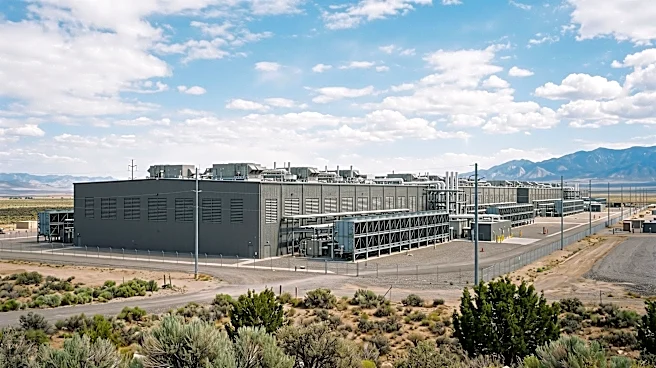
paybacks occurring in under three years. The company's AI revenue run rate has surpassed $25 billion and is experiencing triple-digit percentage growth year over year. This robust performance highlights the increasing reliance on AWS for AI-related computing needs. However, this rapid expansion is not without challenges, as community backlash against data center construction poses a threat to the ongoing AI infrastructure buildout. Concerns from local communities often revolve around environmental impact, energy consumption rates, and the perceived benefits or drawbacks regarding local job creation.
Why It's Important?
The substantial AI revenue run rate reported by AWS underscores the critical role cloud providers play in the burgeoning artificial intelligence sector. This growth signifies a broader trend of businesses and organizations increasingly adopting AI technologies, relying on scalable and powerful cloud infrastructure to support their AI models and applications. For the U.S. economy, this indicates a strong and expanding market for AI services, potentially leading to further technological advancements and job creation in the tech sector. However, the emerging resistance to data center construction highlights a growing tension between technological progress and community concerns. This friction could impact the pace of AI infrastructure development, potentially leading to increased costs, delays, or a shift in where these facilities are located, affecting local economies and the national energy grid. The balance between fostering innovation and addressing environmental and social concerns will be crucial for sustained growth in the AI industry.
What's Next?
AWS will likely continue to invest heavily in its AI infrastructure to meet the escalating demand, potentially exploring new regions or strategies to mitigate community concerns regarding data center construction. This could involve more proactive engagement with local communities, offering clearer benefits, or developing more environmentally sustainable data center designs. The company may also need to navigate evolving regulatory landscapes concerning data center operations and energy consumption. Furthermore, the sustained growth in AI revenue suggests that AWS will continue to introduce new AI-powered services and features, further solidifying its position in the AI market. Competitors in the cloud computing space will undoubtedly observe AWS's success and challenges, potentially leading to increased competition and innovation in AI infrastructure offerings.
Beyond the Headlines
The tension between the rapid expansion of AI infrastructure and community opposition to data center construction points to a larger societal debate about the environmental footprint of digital technologies. As AI becomes more pervasive, the energy demands of these systems will continue to grow, raising questions about renewable energy sources, grid stability, and land use. This situation could accelerate the development of more energy-efficient AI hardware and software, as well as innovative approaches to data center cooling and power generation. Moreover, the discussion around job creation from data centers often overlooks the highly specialized nature of these roles, which may not always align with the local workforce, leading to community dissatisfaction. Addressing these deeper ethical and social implications will be vital for the long-term, sustainable growth of the AI industry in the U.S.