








What's Happening?
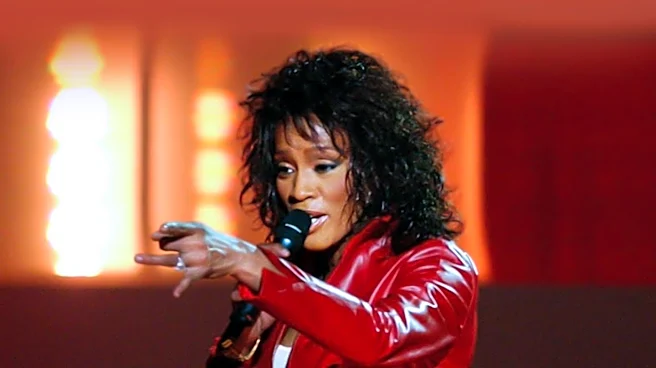
Emily Lordi's new book, 'Holding Lightning: The Life, Loves, and Art of Whitney Houston,' offers a fresh perspective on the iconic singer's rise and fall. Lordi challenges conventional narratives that often credit Houston's mother, Cissy Houston, and record
executive Clive Davis for her success, while frequently blaming her ex-husband for her struggles. The author argues that this framework has obscured the immense effort Houston invested in becoming herself. The book delves into Houston's upbringing in a musically rich family, her dedication to developing her vocal talents, and her understanding of claiming superlative status as a Black woman. It also touches upon her early career, her struggles with substance abuse later in life, and the criticisms she faced regarding her musical choices and identity.
Why It's Important?
This biography is significant as it aims to reframe the public understanding of Whitney Houston, moving beyond simplistic narratives of her career. By emphasizing Houston's agency and hard work, Lordi's book contributes to a more nuanced appreciation of her artistry and resilience. It highlights the pressures and expectations placed upon a Black female artist in the music industry, including criticisms about her authenticity and musical direction. The re-examination of Houston's life can influence how future biographies and cultural analyses approach the lives of complex public figures, encouraging a deeper look into personal struggles and professional dedication rather than relying on easy explanations. This work also reinforces Houston's enduring legacy as one of the greatest singers of all time.
Beyond the Headlines
Lordi's approach in 'Holding Lightning' suggests a broader cultural shift in how society re-evaluates the lives of deceased celebrities, particularly women and people of color, moving away from sensationalism towards more empathetic and analytical perspectives. The book implicitly critiques the media's role in shaping public narratives, often reducing complex lives to easily digestible stories of triumph and tragedy. By focusing on Houston's internal world and her conscious efforts to forge her identity and career, Lordi invites readers to consider the systemic pressures and personal battles that often remain unseen behind the glare of fame. This re-evaluation can foster a more critical engagement with celebrity culture and encourage a deeper understanding of the human experience within the public eye.