


What's Happening?
Three-time Super Bowl champion Mark Schlereth has publicly criticized Indianapolis Colts owner Carlie Irsay-Gordon for her regular presence on the team's sideline during games. Schlereth, speaking on his podcast 'The Stinkin' Truth' on Friday, October
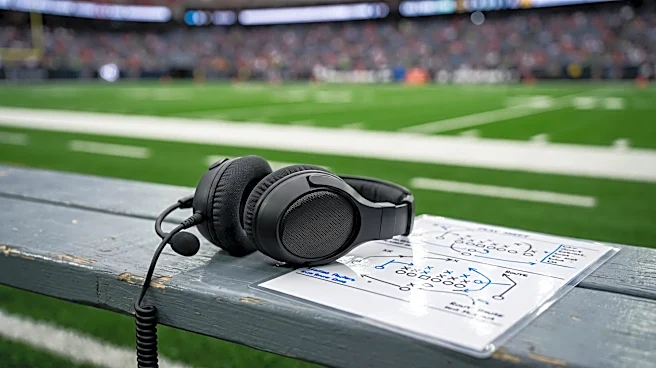
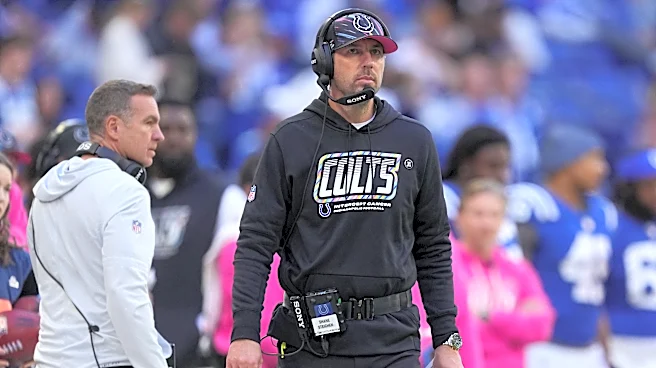
30, following the Colts' 2-5 start to the season, stated that Irsay-Gordon's role should be limited to ownership duties, specifically 'to write checks.' He described her sideline involvement, which includes wearing a headset to listen to coaches' communications and tracking a play sheet, as an 'absolute clown show' and 'embarrassing.' Schlereth emphasized that his criticism is directed at any owner being on the sideline, regardless of gender, and believes it undermines the head coach's authority. ESPN previously reported that Irsay-Gordon is the only NFL owner known to regularly engage in this practice. She began this practice in 2020, prior to becoming the primary owner, with the stated goal of learning the game and understanding team operations to ask more incisive questions in her weekly meetings with the head coach. While some observers have labeled her sideline presence as disruptive, Colts players who have publicly commented have defended her role.
Why It's Important?
Schlereth's strong critique highlights a potential conflict between ownership involvement and coaching authority within an NFL franchise. His comments suggest that an owner's visible and active presence on the sideline, even if passive in terms of direct game-day decisions, can be perceived as undermining the coaching staff. This could impact team dynamics, player perception of authority, and the overall professional image of the organization. The debate also touches on the evolving role of team owners in professional sports, with some advocating for a more hands-off approach focused on strategic and financial oversight, while others might see value in deeper operational understanding. For the Colts, this public criticism from a respected former player could add external pressure on the organization and potentially on Irsay-Gordon's future sideline conduct, especially if the team's performance continues to struggle. The discussion also raises questions about the boundaries of ownership engagement and its potential effects on team performance and internal hierarchy.
What's Next?
The immediate aftermath of Schlereth's comments may involve increased scrutiny on Carlie Irsay-Gordon's sideline presence during upcoming Colts games. While Colts players have defended her role, continued public discussion could prompt further statements from the team's leadership or coaching staff. The situation could also influence how future head coaching candidates view the Colts organization, particularly regarding the autonomy they might expect. If the Colts' performance does not improve, the debate around Irsay-Gordon's sideline role could intensify, potentially leading to internal discussions about adjusting her game-day routine to mitigate perceived distractions or authority conflicts. Conversely, if the team's performance improves, the issue might recede from public discourse, but the underlying tension regarding owner involvement could remain a point of internal consideration. The broader NFL community may also observe this situation as a case study on owner engagement and its impact on team culture and performance.
Beyond the Headlines
This situation extends beyond a simple critique of sideline behavior, touching upon the delicate balance of power and influence within professional sports organizations. It raises questions about the optimal leadership structure in high-stakes environments like the NFL, where clear lines of authority are often considered crucial for success. The discussion also implicitly addresses gender dynamics in sports ownership, although Schlereth explicitly stated his criticism was not gender-based. However, as one of the few female owners in the league, Irsay-Gordon's actions may be subject to different levels of scrutiny. The incident also highlights the constant tension between an owner's desire for deep operational understanding and the need for coaches to maintain unquestioned authority over their team. This dynamic can have long-term implications for organizational culture, potentially affecting recruitment of top coaching talent and player morale if not managed effectively. The incident serves as a reminder that every action by leadership, even those intended for learning, can be interpreted through the lens of power and control.