







What's Happening?
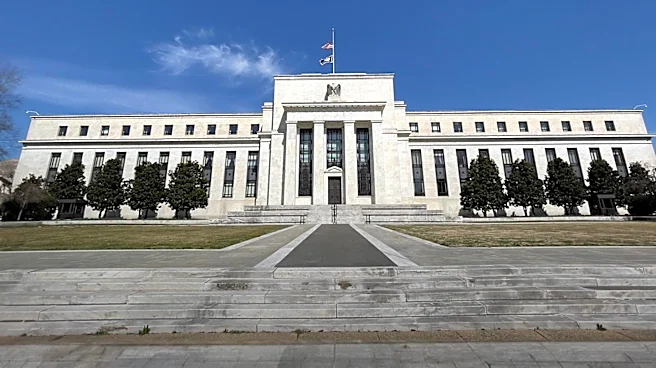
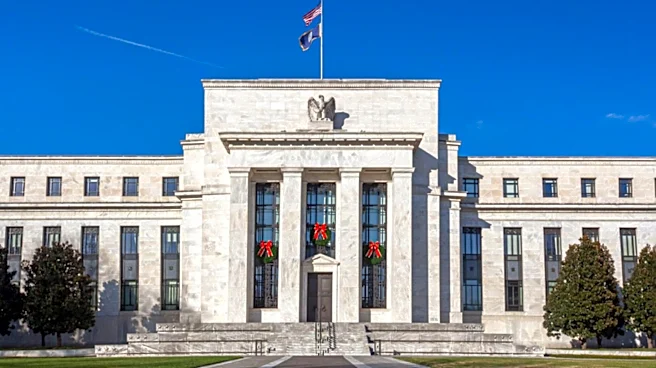
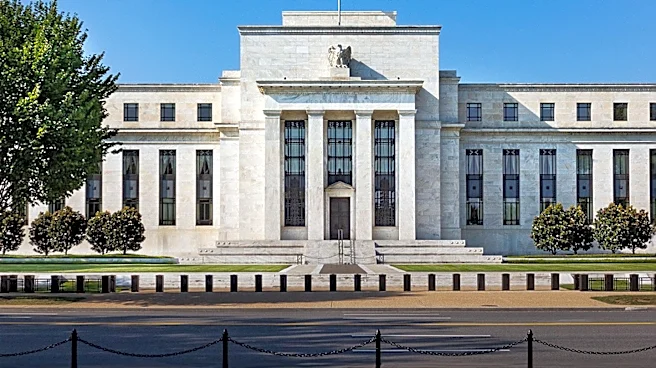
The Federal Reserve's annual stress test has revealed that all 32 large U.S. banks are well-capitalized and capable of withstanding a severe recession scenario. The test projected that these banks could absorb over $708 billion in loan losses while continuing
to lend to households and businesses. The hypothetical scenario included a 39% decline in commercial real estate prices, a 30% drop in home prices, and unemployment rising to 10%. Despite these challenges, the banks maintained capital levels above the minimum regulatory requirements. The projected losses included approximately $200 billion in credit card loans, $160 billion in commercial and industrial loans, and $75 billion in commercial real estate.
Why It's Important?
The results of the Federal Reserve's stress test are significant as they provide reassurance about the stability of the U.S. banking system in the face of potential economic downturns. This resilience is crucial for maintaining public confidence in the financial system and ensuring that banks can continue to support economic activity by providing loans to businesses and consumers. The ability of banks to withstand such severe conditions without falling below regulatory capital requirements suggests that the regulatory measures put in place after the 2008 financial crisis have been effective. This stability is vital for economic stakeholders, including investors, policymakers, and the general public, as it helps mitigate the risk of a banking crisis that could exacerbate economic challenges.