





What's Happening?
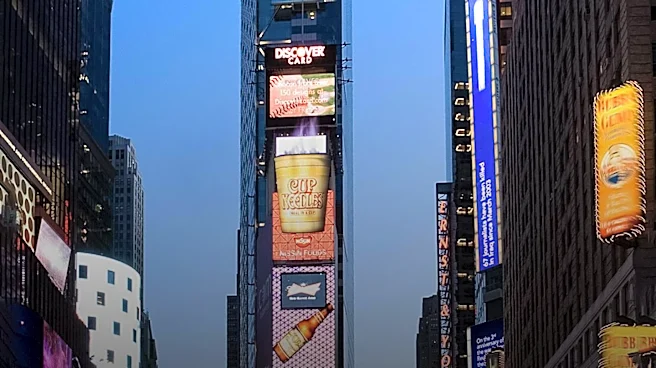
The city of Santa Monica has approved the installation of up to 16 digital billboards along the Third Street Promenade and at Santa Monica Place, reversing a 1985 ban on off-site advertising. This decision, greenlit by the California Coastal Commission
in April, allows for billboards up to 1,000 feet each to remain in place for 30 years. Construction is reportedly already underway, with large metal mounting frames visible above businesses, including a Foot Locker store. City officials project these digital displays could generate between $3.5 million and $7 million in annual revenue, with operators paying a one-time fee of $500,000 per display. The revenue is intended to boost the city's struggling economy, with 85% or $5 million allocated for this purpose, 5% for downtown revitalization, and 10% to repay the Housing Trust Fund. This initiative aims to revitalize an area that has faced challenges with empty storefronts and a visible homeless population post-pandemic.
Why It's Important?
This development signifies a significant shift in Santa Monica's urban landscape and economic strategy. The Third Street Promenade, once a vibrant retail and lifestyle hub, has experienced a decline, making the city's pursuit of new revenue streams critical. The projected annual revenue of up to $7 million could provide a much-needed financial injection, potentially funding economic development, business recruitment, and capital renewal studies. However, the decision also highlights a tension between economic revitalization and preserving local character. Critics argue that the digital billboards will detract from the Promenade's unique charm, raising questions about the long-term impact on tourism and local identity. The move reflects a broader trend in urban centers grappling with post-pandemic economic recovery, often leading to controversial decisions regarding public spaces and advertising.
What's Next?
Construction of the digital billboards is already in progress, and the city will begin collecting revenue from the operators, with fees increasing by 3% starting in June 2027. The effectiveness of these billboards in revitalizing the Promenade's economy will be closely monitored, as will public reaction to the altered aesthetic. The city's allocation of funds towards economic boosting, downtown revitalization, and Housing Trust Fund repayment will be a key focus. It remains to be seen if the projected revenue targets are met and if the influx of funds translates into a tangible improvement for local businesses and the overall atmosphere of the Promenade. Further discussions and potential protests from residents and preservation groups are also possible as more billboards are installed and become operational.
Beyond the Headlines
The controversy surrounding Santa Monica's digital billboards touches upon deeper issues of urban development, public space, and the balance between commercial interests and community values. The decision to reverse a decades-old ban on off-site advertising underscores the severity of the economic challenges faced by the Third Street Promenade. This situation could set a precedent for other struggling urban areas considering similar measures to generate revenue, potentially leading to a proliferation of digital advertising in public spaces. The debate also highlights the evolving definition of 'revitalization,' with some envisioning a modern, revenue-generating environment, while others advocate for preserving historical character and green spaces. The long-term cultural and social impact of transforming a pedestrian-friendly area into a digital advertising hub will be a significant point of discussion for urban planners and residents alike.