








What's Happening?
The Adani Group, a prominent Indian conglomerate, is actively seeking to establish a new-generation engine Maintenance, Repair, and Overhaul (MRO) facility in India. Ashish Rajvanshi, CEO of Adani Defense and Aerospace, stated that the group aims to finalize
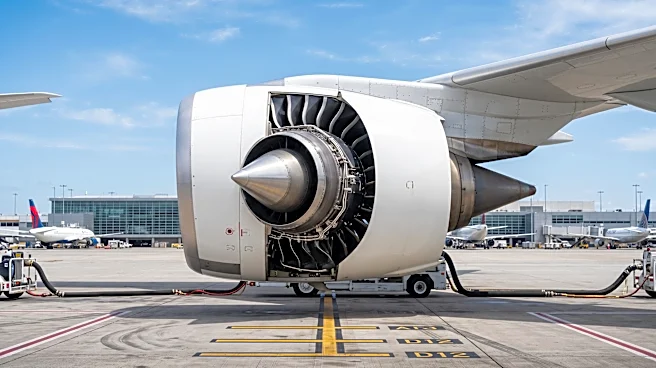
a deal with either CFM International or Pratt & Whitney within 18 months, with the facility becoming operational two years thereafter. This initiative is part of a broader strategic shift by Adani into the aviation sector, which began in 2019. The company currently manages eight airports in India, including both Mumbai airports, and has recently acquired Air Works and Indamer Technics to enter the airframe MRO market. Adani's move into engine MRO is driven by the rapid growth of fleets powered by CFM Leap and Pratt GTF engines in India, aiming to localize maintenance services that are predominantly sent overseas.
Why It's Important?
This development is significant for the Indian aviation industry, as it signals a major push towards self-reliance in aircraft engine maintenance, transforming the current 'work sent overseas' model into a 'Made in India' narrative. Localizing engine MRO will provide Indian carriers with greater confidence in managing engine-servicing costs and turnaround times, which are critical for operational efficiency and profitability. For global engine manufacturers like CFM International and Pratt & Whitney, securing a partnership with Adani could mean a substantial foothold in a rapidly expanding market. The move could also foster a more robust domestic aerospace ecosystem, potentially leading to engine production in India in the future, as indicated by Rajvanshi. This initiative could create numerous high-skilled jobs and reduce India's dependence on foreign MRO services, enhancing national security and economic stability within the aviation sector.
What's Next?
Adani Group is currently in discussions with various engine companies to secure a partnership for the MRO facility. A potential collaboration with Pratt & Whitney could be influenced by Adani's recent agreement with Embraer to explore establishing a final assembly line for Embraer's E2 regional jet in India, as the E2 is powered by Pratt's PW1900G engine. The competitive landscape includes state-owned AI Engineering Services Limited (AIESL), which is already an approved repair shop for CFM56 engines and plans to invest in new-generation engine MRO. Additionally, Safran has already established a $220 million engine-servicing plant in Hyderabad, capable of overhauling Airbus A320neo and Boeing 737 MAX powerplants. IndiGo, India's largest carrier, also plans to establish its own engine MRO facility with CFM's support, adding another layer of competition and opportunity in the evolving Indian MRO market.
Beyond the Headlines
The Adani Group's aggressive expansion into the aviation MRO sector reflects a broader trend of large conglomerates diversifying into strategic industries with high growth potential in emerging economies. This move is not just about business expansion but also about national strategic interests, as a robust domestic MRO capability is crucial for supporting a growing air force and commercial fleet, reducing geopolitical vulnerabilities, and fostering technological independence. The emphasis on 'Made in India' aligns with the government's broader economic policies aimed at boosting domestic manufacturing and reducing imports. However, the success of such ventures will depend on overcoming challenges related to technology transfer, skilled labor availability, and maintaining international quality standards. The competition among major players like Adani, AIESL, Safran, and IndiGo will likely drive innovation and efficiency, ultimately benefiting the entire Indian aviation ecosystem.