






What's Happening?
Music rights holders for Elvis Presley and the publisher of Eminem's catalog have filed separate federal lawsuits against AI music generator Suno. The lawsuits, filed on November 6 in the Northern District of California, accuse Suno of unlawfully using
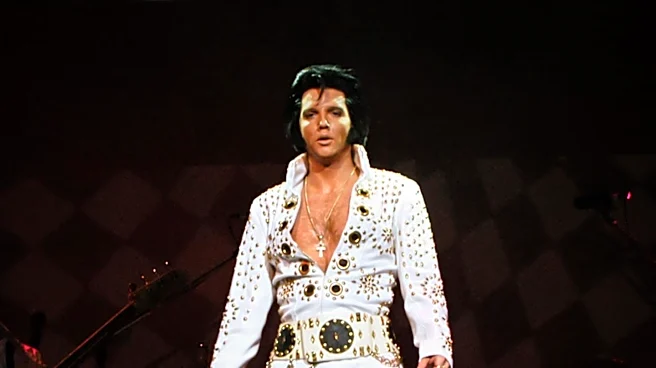
copyrighted music and artists' identities to generate new material. The Presley lawsuit, brought by Authentic Brands Group, Raleigh Music Publishing, and other rights holders, alleges that Suno copied 859 Presley compositions to train its AI system and allowed users to generate music imitating Presley's voice and likeness. Similarly, Eight Mile Style, which manages Eminem's compositions, claims Suno infringed on 269 works by copying material for its AI model and enabling users to create songs resembling Eminem's work. These cases are part of a growing legal battle in the music industry concerning the use of copyrighted works for AI training and the imitation of identifiable performers.
Why It's Important?
These lawsuits highlight a critical and evolving legal challenge within the music industry regarding artificial intelligence. The core issue revolves around intellectual property rights, specifically copyright infringement and the unauthorized use of an artist's identity and creative output. If successful, these cases could set significant precedents for how AI companies can train their models and what responsibilities they bear for the content generated by users. The legal team involved previously represented Marvin Gaye's estate in a landmark copyright case, suggesting a strategic and experienced approach to these new AI-related claims. The outcome could redefine the boundaries of fair use in the context of AI, potentially impacting the development and deployment of AI music generation technologies across the U.S. and globally. Artists and rights holders stand to gain stronger protections, while AI developers may face increased scrutiny and potential limitations on their data sourcing and model training practices.
What's Next?
The lawsuits against Suno are expected to proceed through federal courts, with potential for lengthy legal battles. Suno has stated it employs safeguards, such as not permitting prompts using specific artist names or songs and using third-party systems to screen for misuse. However, the plaintiffs' arguments focus on the alleged training on copyrighted material and the ability of the AI to imitate artists' unique characteristics. The music industry, including major labels like Universal Music Group and Sony Music Entertainment, is increasingly turning to courts to establish clear legal limits on AI-generated music. The outcomes of these cases will likely influence future legislative efforts and industry standards for AI development in creative fields. Further legal actions against other AI music generators are probable as artists and rights holders seek to protect their intellectual property and artistic integrity.
Beyond the Headlines
Beyond the immediate legal implications, these lawsuits touch upon deeper ethical and philosophical questions about creativity, originality, and the nature of art in the age of artificial intelligence. The attorneys' statement, 'The next Elvis won’t pick up a guitar,' encapsulates the fear that AI could diminish the value of human artistry by replicating or even replacing it without authorization or fair compensation. This raises concerns about the future livelihoods of musicians and songwriters, as well as the cultural impact of AI-generated content. The cases also underscore the tension between technological innovation and established legal frameworks designed to protect human creators. The debate extends to whether AI-generated works can truly possess the 'soul' or 'intuition' that artists like Method Man's character, YUNGWOOD, argue is essential to creation, or if they are merely sophisticated copies. The resolution of these legal challenges will not only shape the music industry but also contribute to the broader societal understanding of AI's role in creative endeavors.