





What's Happening?
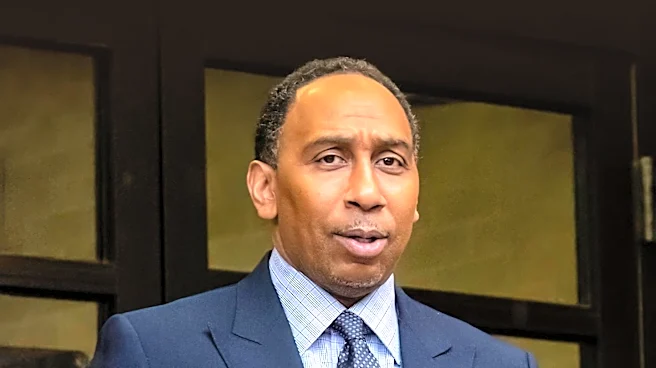
The Kid Mero has publicly called on Stephen A. Smith to accept accountability for the 'Thumbs Down' award he received from the National Association of Black Journalists (NABJ). During an appearance on Hot 97's Group Therapy, Mero stated, 'Be accountable,'
in response to Smith's ongoing resistance to the NABJ's criticism. The NABJ rebuked Smith for what it described as a recurring pattern of disparaging commentary directed at prominent Black women across politics, sports, and media. Mero specifically highlighted Smith's past remarks concerning Rep. Jasmine Crockett, asserting that while Smith is entitled to his opinions, disparaging others opens him up to criticism. Smith, however, has dismissed the award as a 'personal hit job' on his SiriusXM show 'Straight Shooter,' and declared he would 'never speak' to NABJ President Errin Haines after she proposed a private discussion. Smith defended himself by emphasizing his upbringing by Black women and his family ties to Black women, questioning the basis of the NABJ's accusations.
Why It's Important?
This public disagreement between prominent media personalities and a respected journalistic organization highlights significant issues within media accountability and the representation of Black women. The NABJ's 'Thumbs Down' award serves as a critical mechanism for holding journalists, particularly those with large platforms, responsible for their commentary. Mero's call for accountability underscores the expectation that media figures, especially those who identify as journalists, should possess 'thick skin' and accept criticism, even when it is uncomfortable. Smith's reaction, framing the award as a personal attack, raises questions about the willingness of some media personalities to engage constructively with critiques of their work. This incident also brings to the forefront the broader conversation about how Black women are portrayed and discussed in public discourse, and the impact of such commentary on their professional and personal lives. It emphasizes the role of organizations like the NABJ in advocating for fair and respectful media representation.
What's Next?
The immediate aftermath of The Kid Mero's comments will likely see continued debate and discussion within media circles and among the public regarding Stephen A. Smith's stance and the NABJ's award. Smith may choose to respond to Mero's remarks, potentially escalating the public exchange. The NABJ, having issued its statement and award, will likely continue to monitor media commentary and advocate for its principles. This incident could prompt other media personalities and organizations to re-evaluate their own practices and the impact of their words, particularly concerning marginalized groups. It may also lead to increased scrutiny of how media figures handle criticism and whether they demonstrate a commitment to accountability. The ongoing dialogue could contribute to a broader shift towards more responsible and respectful discourse in sports and political commentary, especially concerning issues of race and gender.
Beyond the Headlines
This situation delves into the complex dynamics of race, gender, and power within the media industry. The NABJ's decision to issue a 'Thumbs Down' award to a prominent Black male journalist for his comments on Black women highlights internal community discussions about misogynoir and intersectionality. It challenges the notion that shared racial identity automatically precludes harmful commentary. Smith's defense, invoking his family ties to Black women, is a common rhetorical strategy that often deflects from the substance of the criticism, raising questions about how personal relationships are used to justify public statements. The incident also underscores the pressure on public figures to navigate complex social issues while maintaining their audience and brand. It reveals the tension between free speech and responsible speech, particularly when commentary impacts vulnerable communities. Ultimately, this event contributes to the ongoing evolution of journalistic ethics and the demand for greater sensitivity and accountability in media representation.