





What's Happening?
Cable ab workouts are being highlighted as a superior method for building trunk strength compared to bodyweight exercises, primarily due to their ability to provide progressive overload and target the core from various angles, including rotational movements.
This approach is particularly beneficial for individuals requiring robust core strength for demanding physical tasks, such as soldiers, police officers, and firefighters. The methodology focuses on five key cable exercises: the kneeling cable crunch for loaded flexion, the Pallof press for anti-rotation, high-to-low and low-to-high woodchops for rotational power, and the cable reverse crunch for lower-ab emphasis. These exercises are designed to train the core in ways that directly translate to real-world scenarios, such as bracing against uneven loads or transferring force efficiently from the hips to the hands. The article emphasizes that while bodyweight exercises quickly reach a plateau in terms of overload, cable machines allow for continuous resistance adjustments, promoting ongoing strength gains.
Why It's Important?
The emphasis on cable ab workouts for progressive overload and multi-directional core training is significant for U.S. tactical athletes and anyone engaged in physically demanding professions. Traditional bodyweight exercises often fall short in providing the necessary resistance to build the kind of functional core strength required to brace against heavy loads, resist rotational forces, or generate power for tasks like dragging casualties or swinging equipment. By incorporating cable exercises, individuals can achieve a higher level of spinal stability and trunk stiffness, which is crucial for injury prevention and enhanced performance in high-stress physical situations. This training methodology directly addresses the biomechanical demands faced by military personnel, law enforcement, and first responders, ensuring their core musculature is adequately prepared to handle the unique challenges of their roles. The ability to progressively increase resistance also means sustained improvement in strength, rather than just endurance, which is vital for long-term physical readiness.
What's Next?
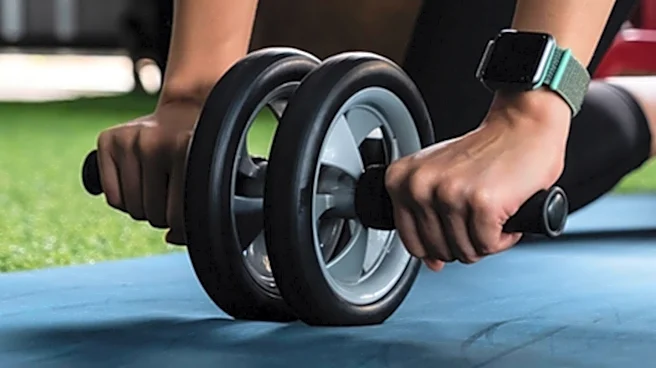
Individuals looking to enhance their core strength, particularly those in tactical professions, are encouraged to integrate cable ab workouts into their training routines. A recommended full cable core session includes high-to-low woodchops, Pallof presses, kneeling cable crunches, and cable reverse crunches, performed two to three times per week. The programming suggests prioritizing rotational power exercises when the nervous system is fresh, followed by anti-rotation, and then flexion and lower-ab work. Progression should involve increasing repetitions within a target range before adding more load or increasing stance difficulty for exercises like the Pallof press. It is also advised to track loads similar to other strength training exercises to monitor progress. While cable work is a significant component, it should be complemented with bodyweight exercises that address anti-extension and spinal extension, such as ab rollouts and supermans, for a comprehensive core development program.
Beyond the Headlines
This focus on cable-based core training highlights a broader shift in fitness methodologies towards functional strength and progressive overload, moving beyond mere aesthetic goals. The emphasis on 'tactical athletes' underscores the critical link between specialized physical training and occupational readiness for those in demanding U.S. public service roles. It also implicitly challenges the conventional wisdom that bodyweight exercises alone suffice for comprehensive core development, advocating for a more nuanced approach that incorporates external resistance. The discussion on spinal stability and injury prevention, particularly concerning loaded spinal flexion, points to the ethical responsibility of trainers and individuals to balance strength gains with long-term spinal health. This approach could lead to a re-evaluation of standard fitness protocols in military and law enforcement training, potentially reducing injury rates and improving overall operational effectiveness by building more resilient and functionally strong personnel.