




What's Happening?
South Korea's exports in August reached nearly $100 billion, totaling $98.25 billion, a notable achievement given that summer vacations typically reduce manufacturing operating rates. This figure follows June's record-breaking $100 billion and July's
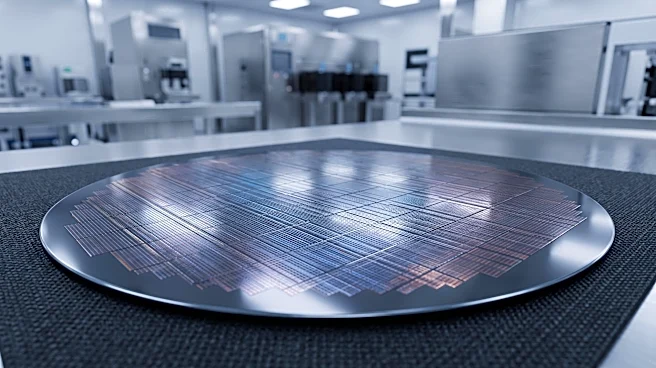
$99 billion. The primary driver for this robust performance was semiconductor exports, which surged to $46.7 billion, marking a 209% increase from the previous year and accounting for 47.5% of total exports. This represents the highest monthly figure on record for semiconductor exports. A Ministry of Trade, Industry and Energy official attributed this strength to sustained demand for artificial intelligence infrastructure, as hyperscalers like Google and Amazon expand their capital spending. Cumulative exports for January through August stood at $693.4 billion, nearing last year's full-year total of $709.3 billion. Fourteen of the country's 20 major export categories, including computers (up 419%), wireless communication devices (up 21%), and secondary batteries (up 24%), posted gains. However, auto exports fell by approximately 30% to $3.9 billion due to summer vacations and strikes.
Why It's Important?
South Korea's near-$100 billion export performance in August, heavily reliant on semiconductor sales, underscores the critical role of the chip industry in global trade and the increasing demand for AI infrastructure. The significant increase in chip exports, particularly to hyperscalers, highlights the ongoing technological transformation driven by artificial intelligence. This robust export data indicates a strong economic pulse for South Korea and suggests continued global investment in advanced computing capabilities. The decline in auto exports, however, points to vulnerabilities in other sectors, potentially due to labor disputes and seasonal factors. For the U.S., this trend is important as it signifies the health of a key global supplier of critical technology components. The sustained demand for AI infrastructure also impacts U.S. tech companies, both as consumers of these chips and as competitors in the AI development space. The overall trade surplus for South Korea, reaching $34.75 billion in August and $202.5 billion cumulatively, further solidifies its position as a major player in the global economy.
What's Next?
If August's daily average export rate continues, South Korea's cumulative exports are projected to surpass last year's total within the current week. The sustained demand for semiconductors, particularly those used in AI infrastructure, is expected to continue driving export growth. The Ministry of Trade, Industry and Energy will likely monitor global AI investment trends and the capital expenditure plans of major tech companies to forecast future semiconductor demand. The performance of other export categories, such as computers and wireless communication devices, which often track semiconductor trends, will also be closely watched. Efforts to mitigate the impact of seasonal factors and labor disputes on sectors like automotive exports may be considered to ensure more balanced growth. The ongoing global competition in AI development will likely keep demand for advanced chips high, influencing South Korea's export strategies and production capacities in the coming months.
Beyond the Headlines
The extraordinary growth in South Korea's semiconductor exports, largely fueled by AI demand, highlights the increasing concentration of critical technology manufacturing in a few key regions. This concentration can create geopolitical sensitivities and supply chain vulnerabilities, as global industries become more dependent on a limited number of producers for essential components. The U.S., through initiatives like the CHIPS Act, is actively working to diversify and strengthen its domestic semiconductor manufacturing capabilities to reduce reliance on foreign suppliers. The surge in AI-driven demand also raises questions about the long-term sustainability of such rapid growth and the potential for future market corrections if supply eventually outstrips demand. Furthermore, the environmental impact of increased chip manufacturing and the energy consumption of AI data centers are growing concerns that will require international attention and sustainable solutions.