





What's Happening?
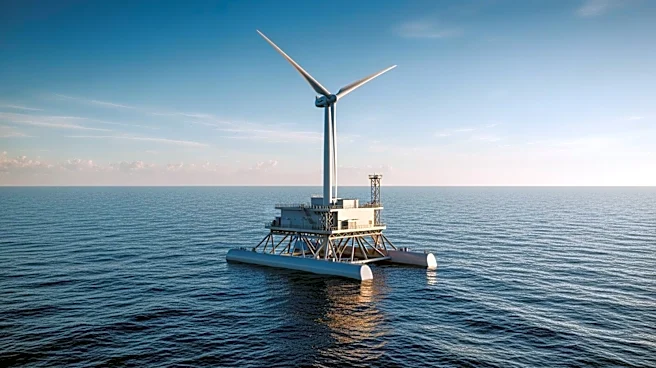
Floating offshore wind farms are emerging as a significant sector in global wind power, leveraging stronger winds in deeper waters. Unlike fixed-bottom towers, floating platforms require stabilizing solutions to manage pitch motion. The Global Offshore
Wind Alliance reports that 27 countries have set offshore wind targets, with seven focusing on floating wind. Japan's Goto Floating Wind Farm and France's Éoliennes Flottantes du Golfe du Lion are notable projects. However, the industry faces challenges such as rising capital costs and supply chain disruptions, which have delayed or restructured contracts. The technology is evolving, with various platform designs being tested to address dynamic forces from wind and waves.
Why It's Important?
Floating offshore wind technology is crucial for expanding renewable energy sources, especially in regions where fixed-platform turbines are not feasible due to depth. This technology can significantly contribute to meeting global energy demands and reducing carbon emissions. The economic pressures to lower the levelized cost of electricity (LCOE) are driving innovation in design and materials, potentially leading to more sustainable and cost-effective solutions. The success of floating wind projects could influence energy policies and investment strategies, impacting the renewable energy market and contributing to global climate goals.
What's Next?
As the technology matures, further research and development are expected to optimize platform designs and protective strategies. Countries with offshore wind targets will likely continue to invest in floating wind projects, potentially leading to increased international collaboration. The industry must address economic challenges to ensure the viability and scalability of floating wind farms. Stakeholders, including governments and private companies, may need to develop new policies and financial models to support the growth of this sector.