
What's Happening?
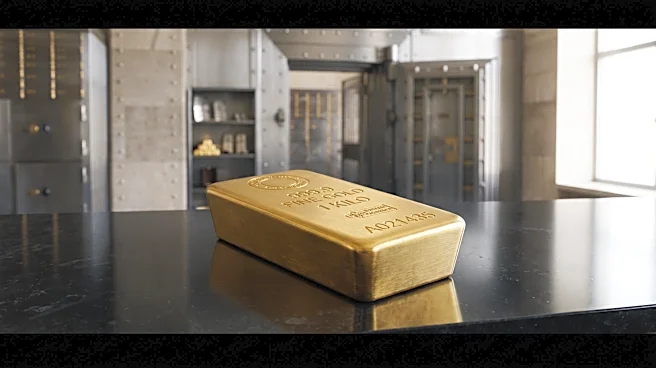
Société Générale, a prominent bank, continues to maintain an overweight position in gold for the first quarter of 2027, despite gold prices experiencing their worst weekly decline since mid-March, falling
8.5% this week. The bank views the current lower prices as a buying opportunity, forecasting gold to average $4,625 an ounce in 2027 and reach $5,000 an ounce by the fourth quarter of that year. This bullish outlook is predicated on an anticipated decline in U.S. dollar strength, with a potential catalyst being the U.S. Treasury reaching the $41.1 trillion debt ceiling around March 2027, which could renew pressure on the dollar and support gold. Continued demand from investors and central banks, particularly the People's Bank of China, which accelerated its purchases, also underpins their forecast. Société Générale recommends buying the dips on gold ahead of peaking real yields and a peak U.S. dollar.
Why It's Important?
Société Générale's long-term bullish forecast for gold, despite the current market downturn, offers a contrasting perspective to the prevailing sentiment driven by Federal Reserve rate hike expectations. This view suggests that while short-term pressures from a strong dollar and rising yields are impacting gold, fundamental factors like potential dollar weakening and sustained central bank demand could drive significant price appreciation in the coming years. For U.S. investors, this implies that the current selloff might be a temporary correction rather than a long-term trend reversal, presenting a strategic entry point for those with a longer investment horizon. The bank's analysis highlights the importance of macro-economic shifts, such as the U.S. debt ceiling and global central bank policies, in influencing commodity markets, potentially affecting portfolio allocations and risk management strategies for U.S. financial institutions and individual investors.
What's Next?
Société Générale's outlook suggests that the next significant upward movement for gold is likely to be triggered by a decline in U.S. dollar strength. Key events to watch include the U.S. Treasury potentially reaching the debt ceiling in March 2027, which could weaken the dollar. The bank also anticipates U.S. Treasury yields to peak in early 2027, further supporting gold. While their quantitative investment model suggests near-term caution for gold, their broader strategic portfolio maintains a 10% allocation. Investors will need to monitor global economic conditions, central bank policies, and geopolitical developments, as renewed geopolitical escalation or higher oil prices could introduce stagflation risks and challenge gold's safe-haven appeal. The bank also sees growing potential in base metals like copper, indicating a broader commodity investment strategy.
Beyond the Headlines
Société Générale's analysis delves into the deeper structural factors that could influence gold prices beyond immediate market reactions. The emphasis on the U.S. debt ceiling as a potential catalyst for dollar weakening highlights a systemic risk that could significantly alter currency valuations and, consequently, gold's attractiveness. The continued demand from central banks, particularly from countries like China, underscores a strategic diversification away from dollar-denominated assets, reflecting broader geopolitical and economic shifts. This suggests that gold's role is evolving from merely an inflation hedge to a strategic reserve asset for nations. The bank's approach of 'buying the dips' reflects a belief in gold's intrinsic value and its potential to perform once current macroeconomic headwinds subside, offering a long-term perspective that contrasts with short-term market volatility.