




What's Happening?
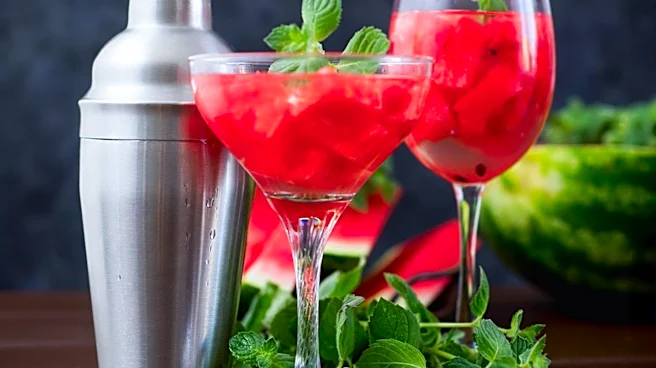
The Hugo cocktail, a spritz made with elderflower liqueur, prosecco, soda water, and fresh mint, is rapidly gaining popularity as a summer drink in the U.S. Originally created around 2005 in Italy by bartender Roland Gruber, the Hugo has been a staple
in European aperitif culture and is now trending on social media platforms like TikTok. Experts attribute its rise to several factors, including its light, refreshing, and less bitter flavor profile compared to the Aperol spritz, making it more approachable for many. Its low alcohol by volume (ABV) aligns with a growing consumer preference for mindful drinking and lighter cocktails. Additionally, the use of fresh ingredients like mint appeals to current culinary trends favoring natural flavors over artificial ones, and its simplicity makes it easy to prepare at home.
Why It's Important?
The Hugo's surge in popularity signifies a shift in American cocktail culture, moving towards lighter, more refreshing, and less alcoholic options. This trend reflects a broader consumer interest in wellness and mindful consumption, where individuals are increasingly conscious of their alcohol intake. The cocktail's accessibility and ease of preparation also democratize mixology, allowing more people to enjoy sophisticated drinks at home without specialized skills or equipment. For the beverage industry, this indicates a growing market for elderflower liqueurs and prosecco, potentially influencing product development and marketing strategies. The Hugo's success also highlights the power of social media in driving beverage trends, as viral content can quickly elevate a drink from niche to mainstream, impacting sales and consumer preferences across the nation.
What's Next?
The Hugo cocktail is expected to continue its upward trajectory in popularity, especially during warmer months. Bartenders and mixologists may begin to experiment with variations, substituting mint with other herbs like basil or exploring different sparkling wines to pair with elderflower liqueur. The trend of low-ABV cocktails is likely to persist, leading to the introduction of more similar drinks that offer refreshing flavors without high alcohol content. The beverage industry may also see an increase in ready-to-drink (RTD) Hugo options, mirroring its availability in Europe. As consumers continue to seek out fresh, natural ingredients, the demand for high-quality elderflower liqueurs and fresh herbs in cocktails will likely grow, influencing supply chains and product offerings in the U.S. market.
Beyond the Headlines
The Hugo's popularity extends beyond a simple drink trend; it reflects a broader cultural embrace of European aperitif traditions and a desire for more relaxed, social drinking experiences. Its rise can be linked to increased international travel and the influence of media showcasing European lifestyles, such as shows like 'The White Lotus.' This cocktail embodies a lifestyle choice that values freshness, simplicity, and moderation, aligning with contemporary values of well-being and authenticity. The 'Hugo effect' could also encourage consumers to explore other less common liqueurs and ingredients, fostering greater culinary adventurousness in the home bar and restaurant scene. Ultimately, the Hugo represents a confluence of global influences, health-conscious choices, and the pervasive power of social media in shaping modern consumer tastes.