






What's Happening?
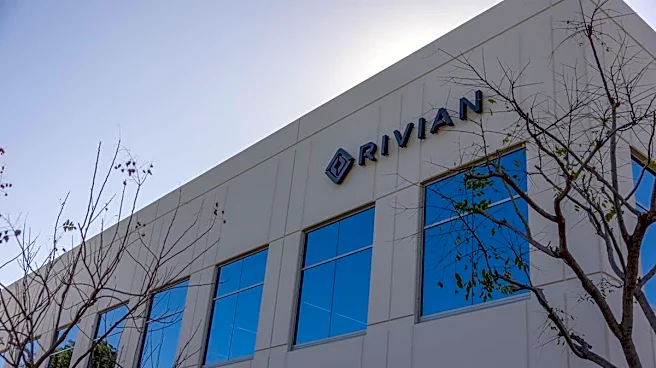
Rivian is implementing a workforce reduction affecting fewer than 2% of its employees as part of a cost-control strategy aimed at achieving profitability. The cuts impact the service and customer organization, including sales and marketing teams. This
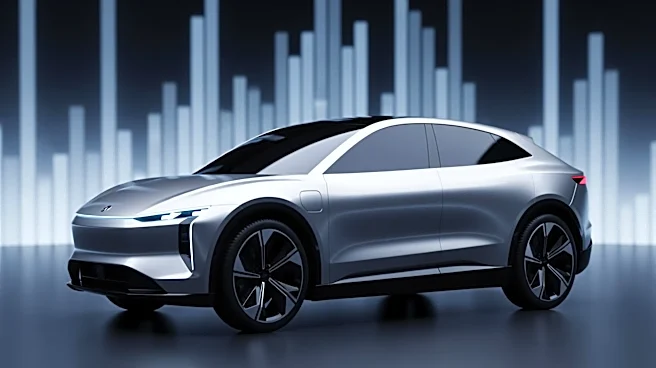
decision follows a previous reduction in October, where over 600 roles were eliminated. Rivian, which had 15,232 employees across North America and Europe at the end of last year, is also focusing on rolling out the R2 SUV, a smaller and more affordable model intended to expand its customer base. Despite these efforts, Rivian has announced it will not meet its 2027 adjusted core profit target due to increased spending on research and development for autonomous driving technology. The company reported a $3.6 billion loss last year while delivering 42,247 vehicles.
Why It's Important?
The workforce reduction at Rivian highlights the challenges faced by electric vehicle manufacturers in balancing growth with financial sustainability. As Rivian seeks to scale its operations and enhance its product offerings, controlling costs becomes crucial to achieving long-term profitability. The move also underscores the competitive pressures in the EV market, where companies must innovate and expand their product lines while managing expenses. Rivian's focus on autonomous driving technology and the introduction of the R2 SUV are strategic steps to capture a broader market share. However, the financial losses and unmet profit targets indicate the difficulties in navigating the evolving automotive landscape. Stakeholders, including investors and employees, are closely watching Rivian's efforts to stabilize its financial position and deliver on its growth promises.
What's Next?
Rivian's next steps involve continuing the development and rollout of the R2 SUV, which is expected to play a significant role in broadening its customer base. The company will also focus on advancing its autonomous driving technology, a key area of investment. As Rivian works towards profitability, it may explore additional cost-saving measures or strategic partnerships to bolster its financial standing. The company's ability to meet its future milestones, particularly in self-driving technology, will be critical in determining the extent of Uber's investment, which could reach up to $1.25 billion by 2031. Rivian's progress in these areas will likely influence its market position and investor confidence.