






What's Happening?
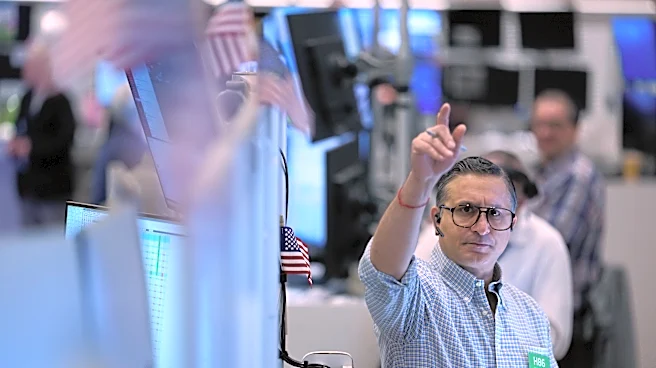
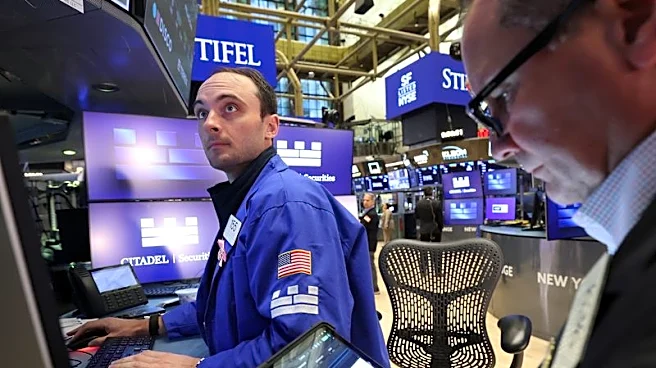
Goldman Sachs has observed a notable divergence in market behavior, with professional traders selling off investments while regular retail investors continue to add money to their portfolios. According to Vincent Lin, Goldman's co-head of Prime Insights
and Analytics, 'fast money' investors, primarily hedge funds and faster-trading firms, have been reducing their exposure to stocks for five consecutive weeks. In contrast, 'slow money' investors, consisting of regular savers contributing to workplace retirement plans, mutual funds, and index funds, injected approximately $150 billion into stocks over the past month, even as prices declined. This selling by professional traders is attributed to a desire to preserve gains amid market volatility, as the average hedge fund's returns dropped from roughly 17% in mid-2026 to just 7% by late November. Many of these funds had invested heavily in artificial intelligence stocks like Nvidia, Microsoft, Meta, and Amazon, and their sales amplified the market drop when these stocks began to fall.
Why It's Important?
This divergence in investor behavior flagged by Goldman Sachs is significant because it highlights a potential instability in the market. The sustained selling by professional investors, who often have access to more sophisticated analysis and real-time data, suggests a cautious outlook on future market performance. Conversely, the continued buying by retail investors, often through passive investment vehicles, could be providing a temporary floor for stock prices. If retail investors were to cease their buying activity, the market could lose a crucial support mechanism, potentially leading to a more pronounced downturn. This situation also underscores the differing motivations and strategies between institutional and individual investors, with professionals prioritizing gain preservation and retail investors often engaging in dollar-cost averaging or long-term investment strategies.
What's Next?
The market's stability could be tested if the 'slow money' investors, the regular savers, begin to pull back from their consistent buying. Vincent Lin noted that the market has been held up partly by these steady contributions. If this cushion weakens, the market could experience increased volatility or a more significant correction. Professional traders are likely to continue monitoring market conditions closely, particularly the performance of key sectors like artificial intelligence, which Lin suggests is transitioning into a new phase beyond its initial infrastructure returns. The ongoing interplay between these two investor groups will be a critical factor in determining short-to-medium term market trends and overall stability.
Beyond the Headlines
The 'fast money' versus 'slow money' dynamic revealed by Goldman Sachs points to a deeper structural aspect of modern financial markets. The rapid selling by hedge funds, particularly in concentrated AI holdings, illustrates the amplified impact of institutional herd behavior and the potential for quick reversals in highly favored sectors. This contrasts with the more gradual, often automated, inflows from retail investors, which can mask underlying weaknesses or provide unexpected resilience. This situation also raises questions about market efficiency and whether the collective wisdom of 'fast money' is a leading indicator of future market direction, or if 'slow money' can sustain market levels through sheer volume. The transition of the AI market, as described by Lin, from infrastructure to a new phase, suggests a maturing of the sector, which could lead to different investment strategies and valuations going forward.