



What's Happening?
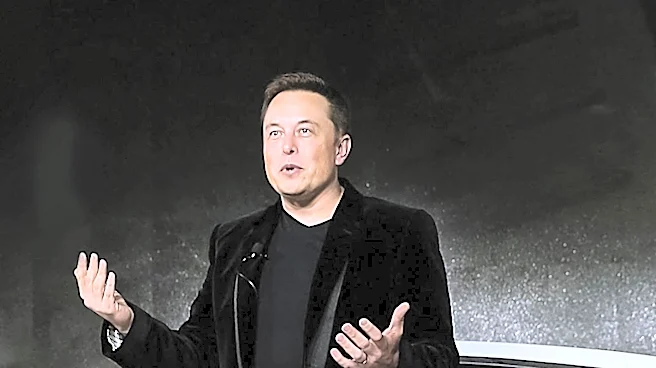
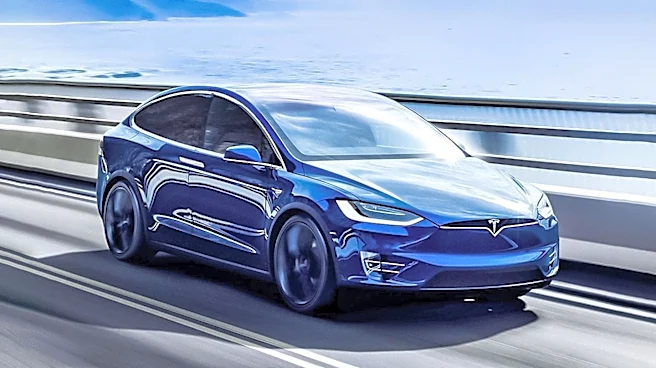
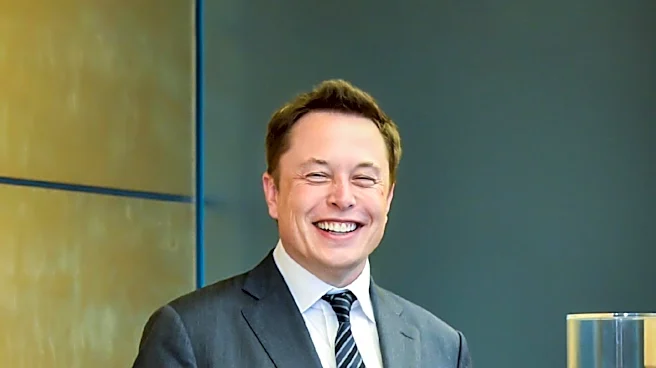
Tesla CEO Elon Musk has announced a radical plan to update the Tesla Model Y to be fully autonomous, eliminating the need for pedals or a steering wheel. This proposal comes as Tesla aims to build on the success of its best-selling vehicle, the Model Y,
which, alongside the Model 3, accounted for the majority of the automaker's sales figures with 478,237 units delivered in the third quarter. The concept of a fully autonomous vehicle without traditional controls is a significant step towards advanced self-driving technology. However, the feasibility of such a vehicle operating outside limited geographic areas is currently uncertain, given the existing challenges and lawsuits surrounding autonomous driving systems. This announcement is seen by some as a move to generate interest in the EV brand amidst increasing competition from other automakers and fluctuations in Tesla's stock performance.
Why It's Important?
This announcement by Elon Musk carries significant implications for the automotive industry, particularly in the realm of autonomous driving technology. If realized, a fully autonomous Model Y without pedals or a steering wheel would represent a major leap forward, potentially redefining personal transportation and the role of human drivers. For Tesla, this could solidify its position as a leader in innovation, attracting new customers and investors interested in cutting-edge technology. However, the technical and regulatory hurdles are substantial. The development and deployment of such vehicles would require extensive testing, new safety standards, and public acceptance. The move also highlights the ongoing competition in the EV market, where automakers are constantly seeking ways to differentiate their products and maintain market share. The success or failure of this ambitious plan could influence future investment and development in autonomous vehicle technology across the industry.
What's Next?
The immediate next steps for Tesla regarding the fully autonomous Model Y are unclear, as the proposal's timeline and feasibility remain uncertain. The company will likely need to address significant technological challenges to develop a vehicle capable of operating safely and reliably without human input or traditional controls. Regulatory bodies will also play a crucial role, as new frameworks and certifications would be required for such a vehicle to be legally operated on public roads. Public perception and acceptance will also be critical, as consumers may be hesitant to adopt vehicles without conventional controls. Tesla's past history of ambitious announcements suggests that while the vision is bold, the execution may face delays or modifications. The company's performance in the stock market and its ability to maintain its lead in the EV sector will likely be influenced by its progress on such innovative projects.
Beyond the Headlines
The concept of a car without pedals or a steering wheel extends beyond mere technological advancement; it touches upon fundamental questions of human-machine interaction, legal liability, and the very definition of driving. Ethically, the complete removal of human control raises concerns about accountability in the event of accidents and the psychological impact on passengers. Legally, existing traffic laws and insurance policies are largely predicated on human drivers, necessitating a complete overhaul to accommodate fully autonomous vehicles. Culturally, the idea challenges deeply ingrained notions of personal freedom and control associated with driving. If successful, this development could usher in a new era of transportation, potentially reducing traffic accidents caused by human error and transforming urban planning. However, it also opens up debates about data privacy, cybersecurity vulnerabilities in autonomous systems, and the potential for job displacement in industries reliant on human drivers.