

What's Happening?
Jennifer Aniston, a prominent Hollywood figure known for her fitness, has expressed regret over her intense and often injury-inducing workout routines from her younger years. According to Grazia USA, Aniston, through her trainer Dani Coleman, revealed
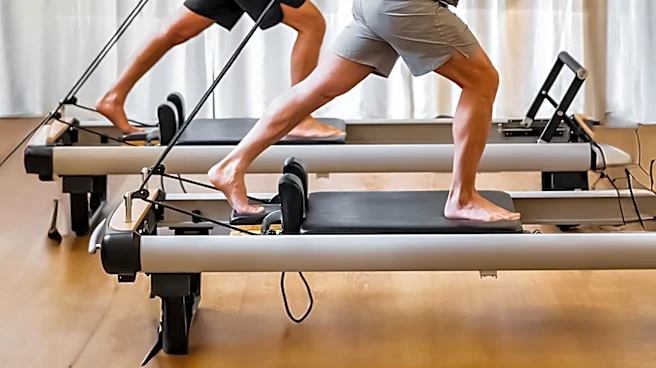
that she previously believed a workout was only effective if it involved extreme exertion, leading to pain and soreness. This mindset, which she now views as 'punishing,' caused her to push through injuries, including a back injury. Five years ago, Aniston transitioned to the Pvolve method, a fitness approach that prioritizes functional movement, strength, and mobility over brute-force intensity. This shift has not only improved her physical condition, making her stronger and leaner, but has also fundamentally changed her perception of what constitutes a successful workout. She now understands that effective exercise does not require breaking down the body.
Why It's Important?
Jennifer Aniston's public reflection on her past fitness choices is significant as it challenges a pervasive 'no-pain-no-gain' culture within the U.S. fitness industry. Her story, as detailed by Grazia USA, highlights the potential long-term physical and mental toll of overly aggressive workout regimens, which many individuals, particularly women, have adopted. By advocating for a smarter, more progressive approach to fitness, Aniston, a Pvolve partner, influences a broad audience to reconsider their own exercise habits. This shift could lead to increased adoption of functional training methods and a greater emphasis on injury prevention and sustainable wellness. For the fitness industry, this could mean a growing demand for programs that focus on holistic health rather than just intense physical output, potentially impacting gym offerings, personal training methodologies, and the marketing of fitness products and services. It also underscores the importance of listening to one's body and prioritizing long-term health over short-term, extreme results.
What's Next?
The public discourse initiated by Jennifer Aniston's statements, as reported by Grazia USA, is likely to encourage more individuals to explore alternative fitness methodologies that prioritize functional movement and injury prevention. This could lead to a continued rise in popularity for programs like Pvolve and similar low-impact, high-efficiency training systems. Fitness professionals and gyms may increasingly adapt their offerings to cater to this evolving demand, emphasizing personalized training, mobility work, and sustainable exercise practices. There could also be a greater focus on educating the public about the risks associated with overtraining and the benefits of a balanced approach to physical activity. As more public figures share similar experiences, the broader fitness culture in the U.S. may continue to shift away from extreme workouts towards more mindful and body-respecting practices, potentially influencing product development in fitness equipment and wearable technology designed to support these new approaches.
Beyond the Headlines
Jennifer Aniston's candid admission, as highlighted by Grazia USA, delves into the deeper societal pressures and misconceptions surrounding fitness, particularly for women. For decades, there has been a prevailing cultural narrative that equates physical suffering with dedication and results, often fueled by media portrayals and the fitness industry itself. Aniston's experience, moving from fear of weights to confidently using heavier ones, challenges the myth that lifting heavy will make women 'bulky,' a misconception that has historically deterred many from strength training. Her story encourages a re-evaluation of what 'strong' and 'fit' truly mean, moving beyond aesthetic ideals to embrace functional strength and overall well-being. This shift could foster a more inclusive and body-positive fitness environment, where individuals are empowered to choose exercise methods that genuinely serve their health and longevity, rather than conforming to outdated or harmful standards.