
What's Happening?
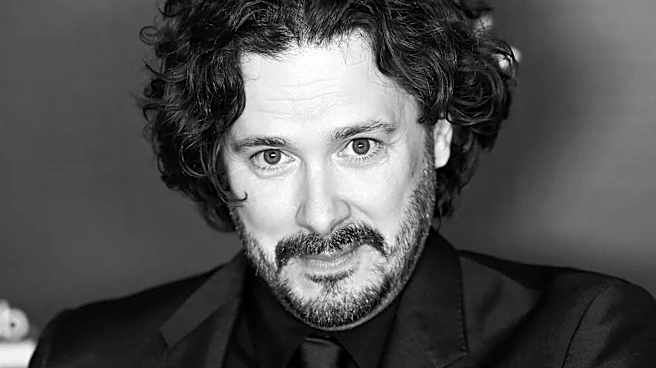
Edgar Wright is set to direct the second movie version of Stephen King's dystopian novel, 'The Running Man,' scheduled for release in 2025. This adaptation follows the original 1987 film starring Arnold
Schwarzenegger. King's novel, published in 1982 under the pseudonym Richard Bachman, depicts a future totalitarian society where a game show called 'The Running Man' forces volunteers to evade professional assassins for their lives. Participants earn money for survival and killing hunters, with a substantial reward for surviving 30 days. The audience watches live footage, often cheering for the hunters. Wright is known for his distinctive directorial style, previously helming the 2004 horror-comedy 'Shaun of the Dead,' and continuing to work with actors Simon Pegg and Nick Frost in subsequent films like 'Hot Fuzz' and 'At World's End.' His recent horror work includes 'Last Night in Soho' (2021).
Why It's Important?
The new adaptation of 'The Running Man' by Edgar Wright is significant as it brings a fresh directorial vision to a classic dystopian narrative that remains highly relevant. Stephen King's original novel, alongside 'The Long Walk,' is credited with foreshadowing the rise of reality television and the dystopian genre, which later saw success with franchises like 'The Hunger Games' and 'Squid Game.' Wright's involvement suggests a potentially unique take on the material, given his track record of blending genres and distinctive visual storytelling. This project could reignite interest in King's early dystopian works and further solidify the themes of societal control and entertainment-driven violence in contemporary cinema. The film's release in 2025, alongside an adaptation of King's 'The Long Walk,' highlights a renewed focus on these prescient stories.
What's Next?
The release of Edgar Wright's 'The Running Man' is anticipated in 2025. This will allow audiences to compare Wright's interpretation with the previous film adaptation and the original novel. The film's success could influence future adaptations of Stephen King's extensive bibliography, particularly his works published under the Richard Bachman pseudonym. It will also be interesting to observe how Wright's distinct style, known for its sharp editing and comedic timing, translates into the grim dystopian setting of 'The Running Man.' The film's reception will likely be a key indicator of how contemporary audiences engage with themes of totalitarianism and extreme reality entertainment, especially given the continued popularity of similar dystopian narratives in media.
Beyond the Headlines
Edgar Wright's direction of 'The Running Man' could offer a deeper exploration of the ethical implications of entertainment that blurs the lines between reality and spectacle, a theme increasingly pertinent in the digital age. King's original novel was remarkably prescient in predicting society's fascination with watching real people compete, often with high stakes, which has evolved into various forms of reality television and online content. Wright's film has the potential to critically examine the voyeuristic nature of such entertainment and the desensitization it can foster. The film might also delve into the psychological toll on participants and viewers within a totalitarian regime, offering a commentary on freedom, choice, and the manipulation of public perception through media. This adaptation could serve as a powerful reflection on societal trends and the enduring power of King's foresight.