





What's Happening?
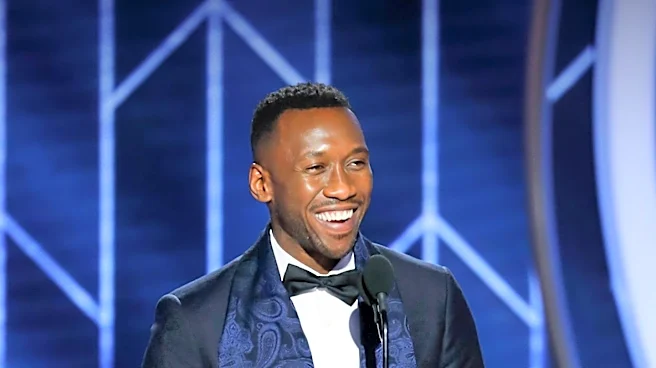
Mahershala Ali, a two-time Academy Award winner, has advised Black actors to prioritize compelling material over seeking validation from the Academy Awards. During an appearance on '7PM in Brooklyn with Carmelo Anthony,' Ali dismissed the notion that
winning an Oscar automatically confers A-list status on Black actors, calling such debates 'talk' that 'doesn’t translate to anything real.' He compared the discussion to the ongoing LeBron James versus Michael Jordan debate, suggesting both are great regardless of such comparisons. Ali, who won Best Supporting Actor for 'Moonlight' in 2017 and 'Green Book' in 2019, argued that the significance of an Oscar varies across generations and that a trophy alone does not dictate a career's trajectory. He also expressed concern about recent political shifts impacting hiring practices, noting that Diversity, Equity, and Inclusion (DEI) initiatives are increasingly viewed negatively, potentially reducing pressure on studios to greenlight diverse projects. Ali believes Black actors desire great material, not to be labeled as 'diversity projects.' His comments come after his own experience with Marvel's 'Blade' project, which did not materialize, and the recent cancellation of 'Wonder Man,' leading to speculation about the prioritization of Black-led films.
Why It's Important?
Mahershala Ali's perspective is significant as it challenges the conventional wisdom within Hollywood that an Academy Award is the ultimate measure of success and influence, particularly for Black actors. His argument highlights a deeper issue concerning systemic biases and the perceived value of Black talent in the industry. By suggesting that the 'A-list' debate is superficial, Ali redirects focus to the quality of work and artistic integrity, which can empower actors to make choices based on creative fulfillment rather than external validation. His concerns about the impact of 'political shifts' on DEI initiatives and hiring practices underscore a critical challenge for diversity in filmmaking. If studios feel less pressure to support diverse projects, it could lead to a regression in representation and opportunities for marginalized communities, affecting both on-screen talent and behind-the-scenes professionals. This stance encourages a re-evaluation of industry metrics and advocates for a more equitable and creatively driven environment.
What's Next?
Ali's comments could spark further discussion within the acting community and among industry stakeholders regarding the true value of awards and the ongoing challenges faced by Black actors. His call to focus on 'great material' might influence how actors select roles and how producers and studios approach project development, potentially leading to a greater emphasis on artistic merit over perceived commercial viability or awards potential. The broader conversation about DEI initiatives and their impact on hiring practices is likely to continue, with Ali's remarks adding weight to arguments for sustained commitment to diversity. While his 'Blade' project did not proceed, Ali has continued to pursue meaningful work, such as 'Your Mother Your Mother Your Mother,' demonstrating his commitment to his philosophy. This ongoing dialogue could encourage a more critical examination of industry practices and a push for more authentic and impactful storytelling.
Beyond the Headlines
Ali's critique extends beyond individual awards to touch upon the systemic issues of power, representation, and artistic freedom within the film industry. His observation that an Oscar means something different for each generation speaks to the evolving nature of Hollywood and the varying degrees of progress made in addressing racial inequality. The comparison of the 'A-list' debate to sports rivalries like LeBron vs. Jordan suggests that such discussions, while engaging, often distract from more substantive issues. Furthermore, his concern about DEI being treated as a 'bad word' points to a potential backlash against diversity efforts, which could have long-term implications for the types of stories told and the voices amplified in cinema. This highlights the ongoing struggle to create a truly inclusive industry where talent is recognized and valued irrespective of race or background, and where creative integrity is prioritized over tokenism.