





What's Happening?
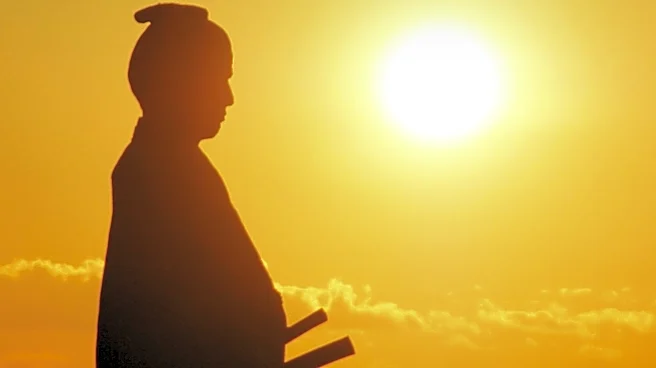
Japanese filmmaker Kiyoshi Kurosawa, known for his mastery in horror, has shifted focus to political intrigue with his latest film, 'The Samurai and the Prisoner'. Set in the feudal Sengoku period, the film is a murder mystery that delves into themes
of power, responsibility, and self-knowledge. Kurosawa adapted the film from Honobu Yonezawa's novel, presenting a narrative that challenges traditional power structures. The film premiered at Cannes and features a complex interplay between characters, highlighting the shifting dynamics of leadership and authority.
Why It's Important?
Kurosawa's transition from horror to political drama signifies a broader exploration of societal themes, reflecting contemporary anxieties about power and governance. By setting the film in a historical context, Kurosawa draws parallels between past and present, offering insights into the nature of leadership and the challenges of maintaining order. This shift in genre not only showcases Kurosawa's versatility as a filmmaker but also contributes to the ongoing dialogue about the role of cinema in examining political and social issues.
What's Next?
Following its premiere at Cannes, 'The Samurai and the Prisoner' is expected to gain international attention, potentially influencing future cinematic projects that explore similar themes. Kurosawa's work may inspire other filmmakers to tackle complex narratives that address power dynamics and societal challenges. As audiences engage with the film, there may be increased interest in historical dramas that offer commentary on contemporary issues.
Beyond the Headlines
Kurosawa's film raises questions about the nature of power and the responsibilities of leadership, prompting viewers to reflect on their own perceptions of authority. The narrative's focus on self-knowledge and moral ambiguity encourages deeper exploration of ethical dilemmas, contributing to broader cultural discussions about justice and governance.