








What's Happening?
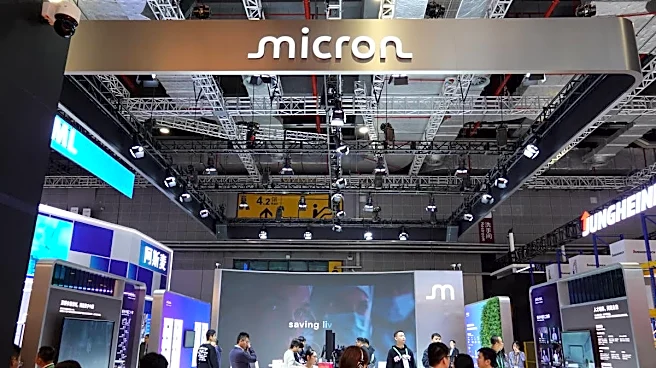
Micron Technology has reported an impressive 87% gross margin in its data center unit for the last quarter, driven by high demand for memory chips used in artificial intelligence (AI) applications. This significant margin is a result of soaring memory prices
as AI technologies strain supply chains. The company's data center business generated record revenue of $11.5 billion, marking a 103% increase from the previous quarter. Overall, Micron's companywide revenue reached a record $41.5 billion, with non-GAAP earnings per share hitting $25.11. The demand for DRAM and NAND memory is expected to remain strong, with tight supply conditions anticipated to persist beyond 2027.
Why It's Important?
Micron's record-breaking gross margin highlights the critical role of memory chips in the rapidly growing AI sector. As AI applications expand, the demand for high-performance memory solutions is likely to continue, positioning Micron as a key player in this market. The company's strong financial performance underscores the potential for significant earnings growth, although the cyclical nature of the memory industry poses risks. Investors are cautious, as reflected in Micron's stock trading at a low multiple, indicating skepticism about the sustainability of current margins. The company's future performance will be closely tied to its ability to maintain pricing power and manage supply constraints.
What's Next?
Micron's future will depend on its ability to navigate the cyclical memory market and sustain its current growth trajectory. The company has raised its planned U.S. investment to over $250 billion through 2035, signaling confidence in long-term demand. However, investors remain wary of potential downturns, as historical patterns suggest that memory prices and margins could eventually decline. Micron's strategic focus will likely involve expanding production capacity and securing long-term supply agreements to mitigate risks. The company's performance in the coming quarters will be a key indicator of its ability to capitalize on the AI-driven demand for memory.