








What's Happening?
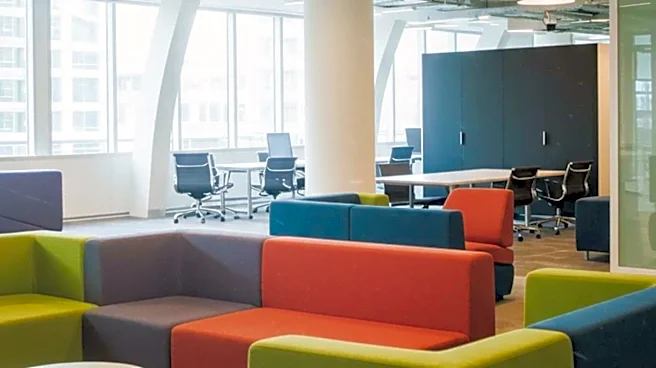
London-based design studio Doshi Levien has developed 'Session,' a 23-piece modular furniture system for Brunner Group, aimed at choreographing human connection in contemporary office environments. The system moves beyond traditional desk-and-chair setups,
offering armchairs, sofas, curved segments, ottomans, and daybeds that can be arranged into countless configurations. This design approach addresses the evolving nature of workplaces, which now function as hybrid environments supporting focused work, informal conversations, and downtime. The furniture is designed to create pockets of intimacy or openness within open-plan interiors, allowing occupants to configure space according to shifting needs for collaboration, concentration, or rest. A key aspect of Session is its focus on circular design, with components designed for disassembly, easy fabric replacement, and repair, extending product life and reducing waste.
Why It's Important?
The 'Session' furniture system is significant because it reflects a fundamental shift in how U.S. businesses and organizations are rethinking physical workspaces in the post-pandemic era. With the acceleration of remote work, the value of the office has transformed from individual workstations to shared amenities and flexible spaces. This modular system allows companies to create dynamic, adaptable environments that cater to a wider range of activities, fostering collaboration and employee well-being. The emphasis on circular design and repairability also aligns with growing corporate sustainability goals, offering a more environmentally conscious approach to office furnishing. By enabling flexible layouts, 'Session' can help businesses optimize their real estate, enhance employee engagement, and support diverse work styles, ultimately impacting productivity and company culture.
What's Next?
The 'Session' furniture system is poised to influence future office design and procurement decisions for U.S. companies. As businesses continue to adapt to hybrid work models, demand for flexible, modular, and sustainable furniture solutions is expected to grow. Manufacturers like Brunner Group, through collaborations with designers like Doshi Levien, will likely see increased interest from corporations looking to refit or design new office spaces that prioritize adaptability and employee experience. The success of 'Session' could also encourage other furniture designers and manufacturers to adopt similar principles of modularity, repairability, and spatial choreography, further shaping the evolution of commercial interior design. The focus on sustainability in design will likely become a standard expectation in the industry.
Beyond the Headlines
Beyond its immediate application in office spaces, the 'Session' system highlights a broader cultural shift towards flexibility and adaptability in design. The concept of furniture choreographing human connection speaks to the psychological impact of physical environments on social interaction and productivity. This approach could extend to other sectors, such as hospitality, education, and even residential design, where adaptable spaces are increasingly valued. The commitment to circular design, allowing for repair and component replacement, also challenges the prevailing 'throwaway' culture, promoting a more responsible and long-term view of product ownership. This philosophical underpinning suggests a future where design not only serves functional needs but also contributes to environmental stewardship and enhanced human experience.