








What's Happening?
ArianeGroup, a developer of launch vehicles and strategic missile systems, operates its launch oversight committee under a joint control structure. This means that Airbus, a 50% owner of ArianeGroup through Airbus Defence and Space, cannot unilaterally
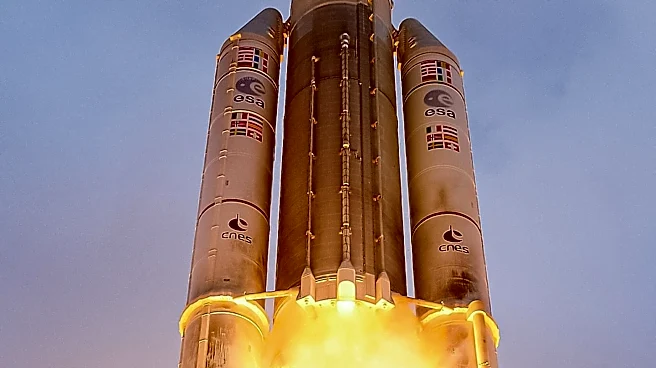
make major decisions without the agreement of Safran, which owns the other 50%. ArianeGroup's portfolio includes the Ariane 6 launcher and the Maia reusable mini-launcher program, managed through MaiaSpace. This joint control mechanism ensures that both major stakeholders have a say in the strategic direction and significant operational choices of the company. The structure is designed to balance the interests of both parent companies in the development and deployment of critical aerospace technologies.
Why It's Important?
The joint control structure of ArianeGroup's launch oversight committee is crucial for the stability and strategic direction of European space initiatives. This shared decision-making process prevents any single entity from dominating the development of key launch vehicles like Ariane 6, which is vital for Europe's independent access to space. For the U.S., this structure highlights a different model of aerospace industry governance compared to its own, where government influence is often through procurement rather than direct equity. The success or challenges of this joint control could offer insights into international collaborations in high-tech sectors, potentially influencing future partnerships or competitive strategies in the global space race. It also underscores the complex interplay between national interests and commercial ventures in critical defense and space technologies.
What's Next?
The continued operation under joint control suggests that future strategic decisions regarding the Ariane 6 launcher and the Maia reusable mini-launcher program will require ongoing consensus between Airbus and Safran. This collaborative approach will likely influence the pace of development, funding allocations, and market strategies for these European space projects. Any disagreements or shifts in priorities between Airbus and Safran could impact the efficiency and competitiveness of ArianeGroup's offerings. The model also implies a continuous need for negotiation and alignment on technological advancements and market positioning, especially as the global space industry becomes increasingly competitive with new players and technologies emerging.
Beyond the Headlines
The joint control mechanism in ArianeGroup reflects a broader European approach to strategic industries, often characterized by shared ownership and governance among key national players. This model aims to pool resources, distribute risks, and ensure national interests are protected in critical sectors like aerospace and defense. While it fosters collaboration, it can also introduce complexities in decision-making, potentially leading to slower responses compared to more centralized corporate structures. The long-term success of ArianeGroup under this model could serve as a case study for other international joint ventures in high-stakes technological fields, demonstrating the benefits and challenges of balancing diverse corporate and national objectives.