





What's Happening?
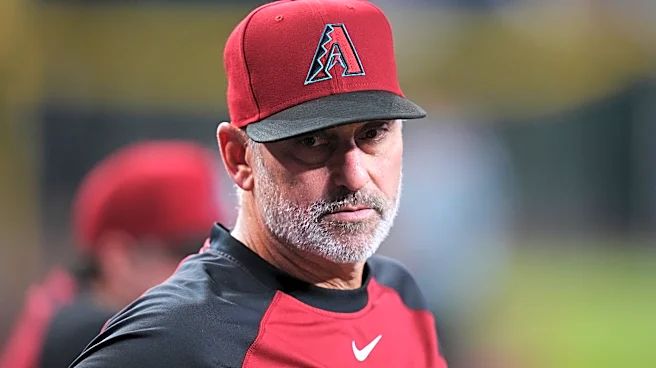
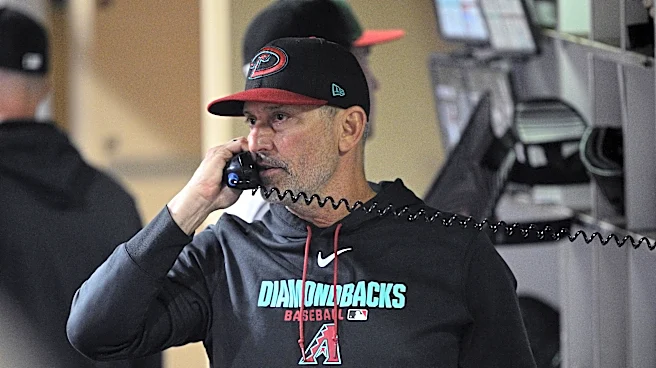
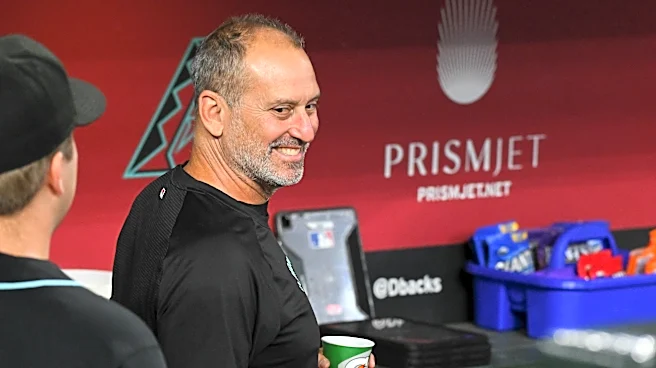
The Arizona Diamondbacks have announced a two-year contract extension for manager Torey Lovullo, whose previous contract expired at the end of the 2026 season. This decision follows a period of speculation regarding his future, as the team missed the postseason
for the third consecutive year. General Manager Mike Hazen confirmed the extension, aligning Lovullo's tenure with Hazen's contract, which runs through 2028 with a club option for 2029. Lovullo, who has managed the Diamondbacks since the 2017 season, expressed his desire to remain with the organization. The team's leadership, including Hazen, managing partner Ken Kendrick, and president/CEO Derrick Hall, cited Lovullo's ability to keep the team cohesive and competitive through a tumultuous 2026 season, marked by injuries and other challenges, as key factors in their decision. Despite not making the playoffs, the Diamondbacks achieved 86 wins in 2026, and Lovullo's overall managerial record stands at 750-768.
Why It's Important?
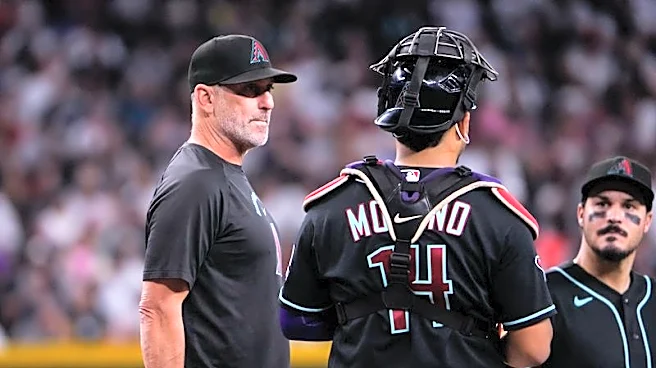
The retention of Torey Lovullo signifies a commitment to continuity within the Arizona Diamondbacks organization, particularly in leadership. This decision suggests that the front office believes Lovullo is the right person to guide the team's young core, which includes players like Corbin Carroll, Gabriel Moreno, and Geraldo Perdomo, towards future success. For the team, maintaining a consistent managerial presence can foster stability and allow for the continued development of its players and team culture. The Diamondbacks' leadership emphasized Lovullo's strong relationships with players and staff, his improved game management, and his ability to navigate challenging seasons. This move also indicates that the organization places significant value on internal cohesion and the manager's influence on team morale and performance, even when playoff berths are narrowly missed. The decision to extend Lovullo despite recent playoff droughts highlights a belief that the team's struggles are not solely attributable to the manager but also to roster construction, which the front office acknowledges as its responsibility.
What's Next?
Following the contract extension, Torey Lovullo will now focus on preparing the Arizona Diamondbacks for the 2027 season. The immediate next steps involve the front office, led by General Manager Mike Hazen, working to identify and acquire the necessary pieces to strengthen the roster. Lovullo will then integrate these new players and continue to develop the existing young talent. The team aims to overcome the hurdle of narrowly missing the playoffs in recent years and reach the next tier of competition. Lovullo has stated that championships are built through preparation, indicating a focus on strategic planning and player development in the coming weeks and months. The Diamondbacks will hold a press conference to provide further updates. The organization will also need to address fan sentiment, as some may be pleased with the continuity while others may have desired a change in leadership after multiple seasons without a playoff appearance.
Beyond the Headlines
The decision to retain Torey Lovullo goes beyond simple win-loss records, touching upon the deeper dynamics of team management and organizational philosophy in professional sports. It highlights a belief in the value of leadership stability and the cultivation of a strong team culture, even in the face of external pressure for change. General Manager Mike Hazen's emphasis on Lovullo's ability to keep the team together during a 'tumultuous season' and his positive relationships with players and staff suggests a focus on intangible qualities that contribute to long-term success. This approach contrasts with a purely results-driven model, where a manager might be dismissed after consecutive playoff misses. The Diamondbacks' leadership appears to be investing in a process-oriented strategy, trusting that Lovullo's leadership will eventually translate into sustained on-field success with the right roster. This also underscores the complex interplay between a manager's role in player development and game management, and the front office's responsibility for roster construction.