









What's Happening?
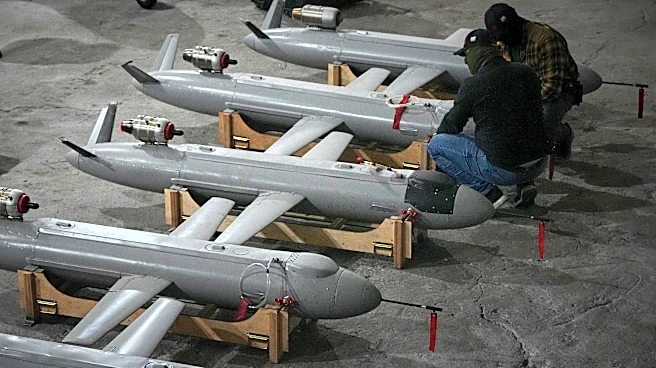
Shield AI has developed Hivemind software that significantly improves the precision of munitions in conflict zones. According to company President Ryan Tseng, the software has been integrated into various loitering attack munitions, achieving a probability-of-kill
(Pk) rate of over 75% in real conflicts, including in Ukraine. This marks a substantial improvement from previous GPS-guided munitions, which had Pk rates of less than 5% due to enemy interference with navigation systems. The software's success was highlighted at the Eurosatory trade show, where Shield AI announced a partnership with Destinus to integrate Hivemind into the Hornet drone interceptor and the Ruta cruise missile.
Why It's Important?
The integration of Hivemind software into munitions represents a significant advancement in military technology, potentially altering the landscape of modern warfare. By enhancing the precision of munitions, Shield AI's technology could provide a strategic advantage to military forces, reducing collateral damage and increasing the effectiveness of military operations. This development is particularly relevant for the U.S. defense sector, which continuously seeks to maintain technological superiority. The improved precision could also influence military procurement decisions and strategies, impacting defense contractors and military budgets.
What's Next?
Following the successful integration of Hivemind software, Shield AI and Destinus plan to continue their collaboration, potentially expanding the software's application to other munitions and military platforms. This could lead to further innovations in autonomous weapon systems. Additionally, other defense contractors may seek to develop or acquire similar technologies to remain competitive, potentially leading to increased investment in autonomous systems and artificial intelligence within the defense industry.