







What's Happening?
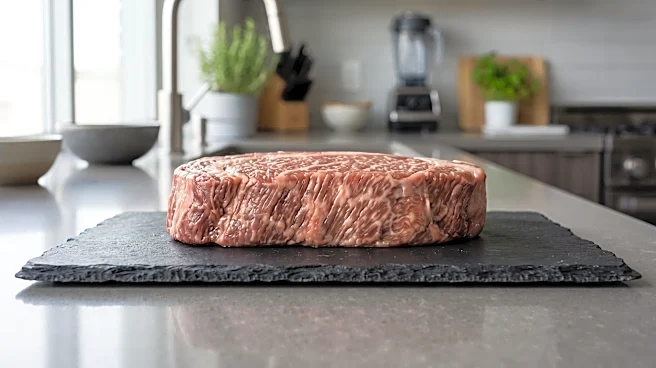
Researchers in South Korea, led by Professor Seon-Tea Joo at Gyeongsang National University, have developed a hybrid cultivated meat prototype that combines animal muscle cells with plant-derived proteins. This innovation aims to replicate the fibrous
structure and marbling of whole beef cuts, integrating proteins from peas, soybeans, and wheat. The project, supported by the Ministry of Agriculture, Food and Rural Affairs and funded under the High Value-Added Food Technology Development Program, has reportedly achieved a 70-80% reduction in production costs compared to existing methods. The development was announced by South Korea's Korea Institute of Planning and Evaluation for Technology in Food, Agriculture and Forestry (IPET) on October 22. Commercial development is being pursued through Orange CAU, a university spinout established in July 2024, which is developing its Biomimetic Myofiber platform and products under the Marvel Marble brand.
Why It's Important?
This development is significant for the alternative protein sector, particularly in addressing the high costs and manufacturing complexities that have hindered the commercial expansion of cultivated meat. By incorporating plant proteins and reusable cell-culture scaffolds, the South Korean team aims to reduce the quantity of cultivated cellular material required, making the production process more efficient and economically viable. The reported cost reduction could make cultivated meat more accessible and competitive with traditional meat products, potentially shifting consumer preferences and global supply chains. For the U.S. market, this could introduce a new, more affordable alternative protein option, influencing domestic research and development in cultivated meat and plant-based alternatives. The focus on replicating whole-muscle cuts also addresses a key challenge for plant-based meats, which often struggle to achieve the complex texture of conventional meat.
What's Next?
Orange CAU is actively pursuing commercial development of the hybrid cultivated meat prototype, with an anticipated selling price of approximately KRW40,000 (around US$30) per kg, significantly lower than premium Korean beef. The company has registered patents and established a HACCP-certified facility, indicating a move towards manufacturing and product development. However, the commercial success will depend on manufacturing scale, regulatory approvals, product consistency, and market acceptance. The technology's broader adoption could accelerate timelines for commercial products by reducing one of the largest variable expenses in cell growth. Over the next 12 months, similar media formulations could influence regulatory approvals by demonstrating consistent safety profiles across multiple cell types, potentially paving the way for wider market entry in the U.S. and other regions.
Beyond the Headlines
The South Korean development reflects a broader trend in alternative protein research towards hybrid formulations that combine different protein sources. This approach attempts to bridge the limitations of purely plant-based or cultivated meat products, offering a middle ground that could deliver consistent sensory quality and nutritional performance at commercially viable costs. This shift could lead to a more diversified alternative protein market, where products are not solely defined by one production technology but by the integration of multiple approaches. The ethical implications of reducing reliance on animal-derived ingredients and the potential for more sustainable food systems are also significant. This innovation could trigger long-term shifts in agricultural practices and food manufacturing, potentially reducing the environmental footprint of meat production globally.