

What's Happening?
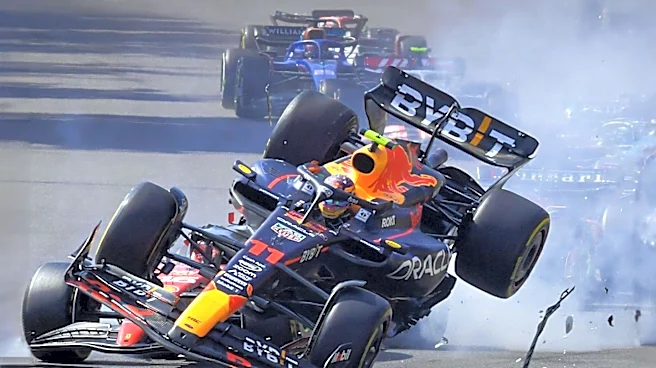
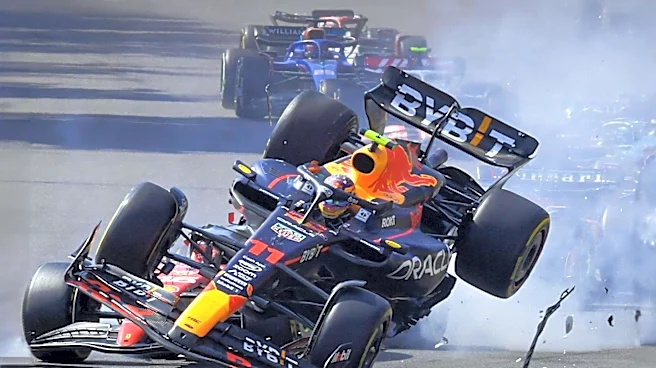
Two-time Formula 1 world champion Fernando Alonso has reiterated his criticism of drivers at the back of the F1 grid, specifically mentioning Williams' Alex Albon. Following a collision with Albon during the opening lap of the United States Grand Prix
in Austin, Alonso stated that the quality of drivers in the bottom third of the grid is 'very low' and that they exhibit a 'lack of talent.' The incident, which occurred at the Turn 11 hairpin, saw Albon attempt to overtake Alonso for 12th place, resulting in damage to both cars. Neither driver received a penalty, and both continued the race, with Alonso finishing 16th and Albon 17th. Alonso maintained his stance ahead of the Mexico City Grand Prix, emphasizing that such incidents, particularly on the first lap, are unnecessary, especially given the cost cap regulations in Formula 1. He also noted that the difficulty of driving cars with less grip at the back of the grid often leads to more mistakes.
Why It's Important?
Alonso's comments highlight a significant debate within Formula 1 regarding driving standards and the competitive landscape. His critique, while directed at specific drivers, reflects broader concerns about safety and the financial implications of frequent collisions, particularly in the context of the sport's cost cap regulations. For teams operating on tighter budgets, damage incurred from avoidable incidents can have a substantial impact on their ability to develop and maintain their cars throughout the season. This perspective also touches upon the perceived talent gap between the front-running teams and those at the back, raising questions about the overall quality and consistency of driving across the grid. The discussion could influence how race stewards assess incidents and potentially lead to stricter penalties for what are deemed 'unnecessary' mistakes, thereby affecting race strategies and driver behavior, especially in the crucial opening laps.
What's Next?
The ongoing debate is likely to continue within the Formula 1 paddock, with drivers and team principals potentially weighing in on Alonso's remarks. While Alonso stated he would not bring up the issue in the drivers' meeting, the comments have already sparked reactions from other drivers like Pierre Gasly and Oliver Bearman, who defended the current grid's talent level. This discussion could lead to increased scrutiny of driving incidents, particularly those occurring in the early stages of races and involving drivers from the lower-ranked teams. Race stewards might face pressure to apply more stringent interpretations of racing rules to deter aggressive or risky maneuvers that lead to collisions. Furthermore, the financial implications of car damage under the cost cap could prompt teams to re-evaluate their drivers' risk-taking behavior, potentially influencing driver selection and team strategies in future seasons.
Beyond the Headlines
Alonso's outspoken criticism delves into the underlying pressures and dynamics of Formula 1, extending beyond mere on-track performance. His remarks about 'low level' driving and 'lack of talent' touch upon the intense competition for limited grid spots and the immense financial backing often required to secure a seat. While he acknowledges that cars at the back are harder to drive, his emphasis on 'unnecessary' mistakes, especially when 'fighting for nothing,' suggests a deeper concern about professional conduct and strategic decision-making. This perspective also implicitly questions the effectiveness of the cost cap in preventing teams from absorbing the costs of frequent damage, hinting at potential disparities in how different teams manage their budgets and risk. The controversy could also spark a broader conversation about driver development pathways and whether the current system adequately prepares all drivers for the demands of Formula 1, or if it inadvertently promotes a culture where some drivers are perceived as less skilled or more prone to errors.