



What's Happening?
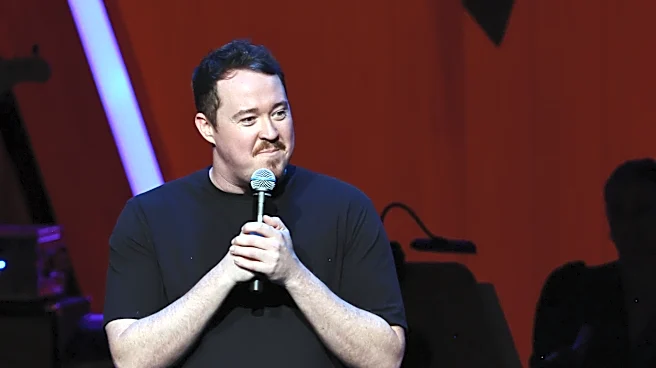
Grace Brassel, ex-girlfriend of comedian Shane Gillis, has published an essay in The Cut detailing what she describes as 'cruel' behavior during their relationship, which lasted from May 2024 to August 2025. Brassel, who was 25 when they began dating,
claims Gillis, who was in his 30s, would make 'remarkably cruel' comments and play them off as jokes. She also alleges that Gillis policed her attire, referred to women as 'whores,' and expected her to quit her job to become his 'stay-at-home girlfriend.' Brassel recounts a period where she 'cried every day' due to the stress and isolation, particularly after moving to West Chester, Pennsylvania, where Gillis allegedly expected her to handle all household duties. The essay also mentions an incident where Brassel discovered Gillis was cheating on her, leading to their breakup. Gillis, in response, stated, 'Grace and I had some good times together. Breakups are tough, and I wish her the best.'
Why It's Important?
This essay is important as it sheds light on alleged patterns of behavior by a public figure, Shane Gillis, and raises questions about the dynamics of power and control within relationships, particularly when one partner has a significantly higher public profile or financial standing. Brassel's account highlights the potential for emotional manipulation and isolation, which can have severe psychological impacts on individuals. The essay also contributes to broader conversations about how public figures' personal conduct aligns with their public image and the responsibilities that come with influence. For Gillis, these allegations could impact his public perception and career, especially given his past controversies. For the public, it serves as a cautionary tale about recognizing 'red flags' in relationships and the importance of maintaining personal autonomy and support systems.
What's Next?
The publication of Grace Brassel's essay is likely to spark further discussion and scrutiny regarding Shane Gillis's character and past behavior. While Gillis has offered a brief statement, the detailed allegations may prompt more extensive public commentary or reactions from his colleagues and the entertainment industry. This could lead to a re-evaluation of his public persona and potentially influence future career opportunities. For Brassel, sharing her story may offer a sense of closure and empower others who have experienced similar situations. The essay could also fuel broader conversations about accountability for public figures and the support systems available for individuals in emotionally challenging relationships.
Beyond the Headlines
Beyond the immediate allegations, Brassel's essay touches on deeper societal issues concerning gender dynamics and the expectations placed on women in relationships, particularly with successful men. Her description of becoming a 'stay-at-home girlfriend' with 'no chance for upward mobility' highlights the subtle ways individuals can lose their independence and career aspirations. The essay also implicitly addresses the psychological toll of emotional abuse, where cruel remarks are disguised as jokes, leading to self-doubt and isolation. The public's reaction to such narratives often reflects evolving cultural attitudes towards consent, respect, and the responsibilities of those in positions of power or influence. This situation could contribute to ongoing dialogues about healthy relationships and the importance of recognizing and addressing manipulative behaviors.