




What's Happening?
Feng Shui principles are being applied to office layouts to improve staff concentration, teamwork, and morale. According to Martin Fengshui, business owners often overlook the energy layout of their offices, which can significantly impact overall performance.
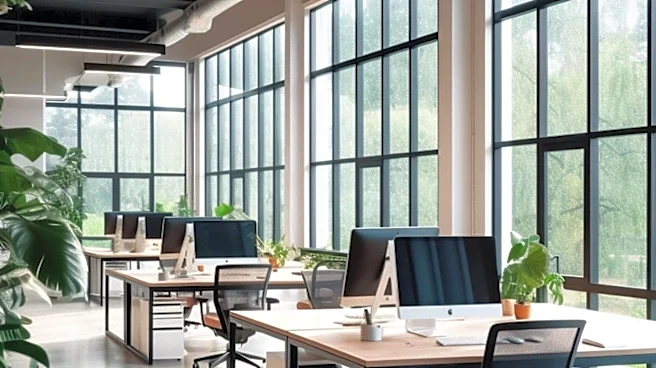
Key recommendations include ensuring staff seats have solid support behind them, avoiding placement against walkways or entrances to prevent insecurity and poor focus, and keeping main walkways clear. Additionally, offices should be bright and well-ventilated to foster 'yang energy,' which boosts morale and vitality. Cluttered or dark spaces, conversely, accumulate 'stale qi' and negatively affect staff mood and efficiency. Regular tidying and clear walkways are highlighted as fundamental, yet frequently neglected, Feng Shui practices for a productive work environment.
Why It's Important?
The application of Feng Shui in office design holds significant importance for U.S. businesses by potentially enhancing employee well-being and operational efficiency. A well-designed office, guided by these principles, can lead to improved focus and reduced stress among employees, which directly translates to higher productivity and better team collaboration. This approach moves beyond traditional ergonomic considerations to address the subtle energetic influences on human behavior and mood within the workplace. Companies that adopt such practices may see a reduction in absenteeism and an increase in employee retention, as a harmonious environment contributes to job satisfaction. Furthermore, a positive office atmosphere can project a favorable image to clients and partners, indirectly supporting business growth and success in a competitive market.
What's Next?
Businesses are likely to increasingly explore and integrate Feng Shui principles into their office design strategies. This could involve consulting with Feng Shui experts during the planning or renovation phases of office spaces. The trend may lead to a greater demand for interior designers specializing in holistic and energy-conscious design. Companies might also implement regular tidying and decluttering initiatives, emphasizing the importance of clear and bright workspaces. Furthermore, there could be a rise in the use of natural light, ventilation, and specific plant arrangements to enhance the 'yang energy' and overall 'qi' within offices. The focus will be on creating environments that not only look aesthetically pleasing but also actively support the mental and emotional well-being of their occupants.
Beyond the Headlines
The integration of Feng Shui into modern office design reflects a broader societal shift towards holistic well-being and mindfulness in professional settings. This trend goes beyond mere aesthetics, touching upon the psychological and even spiritual aspects of the work environment. It challenges the conventional, purely functional approach to office planning by suggesting that subtle energy flows can profoundly impact human performance and interaction. This could lead to a re-evaluation of how workspaces are conceived, moving towards designs that prioritize emotional comfort and energetic balance alongside practical utility. The long-term implication might be a more human-centric approach to architecture and interior design, where the 'feel' of a space is considered as crucial as its form and function, potentially influencing urban planning and building codes to incorporate elements that promote natural light, airflow, and harmonious layouts.